
By admin
Posted in ceremonial matcha, editor pick, premium matcha, rare matcha varieties, Tea Education | Tags : ceremonial grade matcha, gozen matcha, microbiome Matcha, premium matcha
Ceremonial vs Culinary Grade Matcha Powder Explained
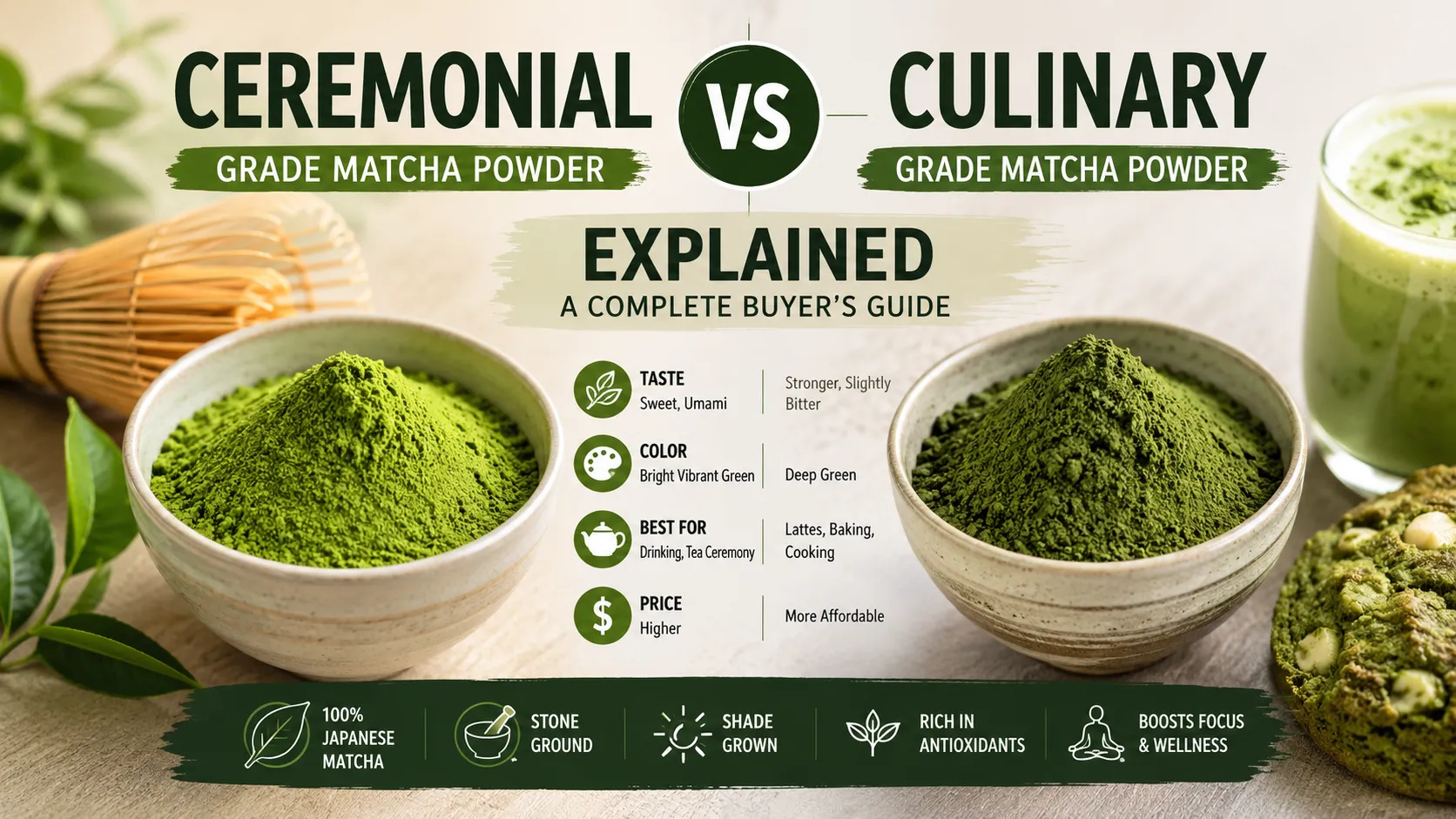
Ceremonial grade matcha is made from the youngest, shade-grown tea leaves, stone-ground into a fine, vibrant green powder meant for drinking straight with water. Culinary grade matcha uses slightly older leaves, has a bolder, more bitter flavor, and costs less — making it ideal for lattes, smoothies, and baking.
Standing in front of a shelf of matcha tins — or scrolling through dozens of listings online — it’s easy to feel stuck. One tin says “ceremonial grade.” Another says “culinary grade.” The prices are wildly different, the colors look almost the same, and the descriptions all promise “authentic Japanese matcha.“
Key Takeaways
- Ceremonial grade matcha is made from the youngest tea leaves, stone-ground for a smooth, naturally sweet taste — best for drinking on its own.
- Culinary grade matcha has a bolder, slightly bitter flavor and holds up well when mixed with milk, sugar, or other ingredients.
- Both grades come from the same Camellia sinensis plant and share similar core nutrients, though freshness and quality affect this more than grade alone.
- Price differences reflect harvest timing, leaf selection, and processing — not necessarily “better” health benefits.
- The right choice depends on how you plan to use it, not on which one sounds more premium.
So which one do you actually need?
This confusion is common, and it’s not your fault. Matcha packaging rarely explains why the grades differ or who each one is really for. Get it wrong, and you might end up with a $30 tin of delicate ceremonial matcha dumped into a blender with banana and almond milk — or a bitter culinary matcha you try to sip straight and can’t finish.
The grade you choose affects taste, texture, health value, and how much you actually get for your money. This guide breaks down ceremonial vs culinary grade matcha powder in plain language, so you can buy with confidence, whether you’re starting a mindful morning tea ritual or baking matcha cookies for the weekend.
What Is Matcha Powder?
Matcha is a finely milled powder made from specially grown green tea leaves. Unlike regular green tea, where leaves are steeped and then discarded, matcha involves consuming the entire leaf in powdered form. That’s a key reason matcha delivers more concentrated nutrients per serving than steeped tea.
Authentic Japanese matcha powder starts with a plant called Camellia sinensis, the same plant used for most teas. What makes matcha different is the way it’s grown and processed:
- Shade-growing: Around 3–4 weeks before harvest, tea bushes are covered to block sunlight. This boosts chlorophyll and amino acid content, especially L-theanine, giving matcha its vivid green color and naturally sweet, umami-rich flavor.
- Careful hand or machine harvesting: Only the top leaves and buds are picked.
- Steaming and drying: Leaves are steamed briefly to stop oxidation, then dried into a brittle form called tencha.
- Stone grinding: Tencha is ground slowly using traditional granite stone mills, producing the ultra-fine powder matcha is known for. This slow process prevents heat buildup that could damage flavor and nutrients.
This labor-intensive method is why matcha is considered a premium form of tea, and why authentic Japanese matcha powder — particularly from regions like Uji (Kyoto), Nishio, and Yame — is prized worldwide.
What Is Ceremonial Grade Matcha?
Ceremonial grade matcha refers to the highest-quality matcha, traditionally reserved for Japanese tea ceremonies. It’s made from the youngest, most tender leaves picked during the first harvest of the season (usually late April to May), when amino acid content is at its peak.
Key characteristics of ceremonial grade matcha:
- Color: Bright, vivid green — almost jade-like.
- Texture: Extremely fine, almost silky powder.
- Aroma: Fresh, grassy, slightly sweet.
- Taste: Smooth, naturally sweet, with a rich umami flavor and minimal bitterness.
- Processing: Stone-ground slowly to preserve delicate flavor compounds.
Ceremonial grade matcha is designed to be whisked with hot water alone — no milk, no sweeteners. This is why quality matters so much here: there’s nothing to mask an inferior powder. It’s traditionally used in the Japanese tea ceremony (chanoyu), but many people now enjoy it daily as a mindful, quiet ritual to start the morning.
What Is Culinary Grade Matcha?
Culinary grade matcha comes from slightly more mature leaves, often harvested later in the season. It has a bolder, more robust flavor with noticeable bitterness or astringency compared to ceremonial grade.
Because of this stronger flavor profile, culinary matcha is generally more affordable and works well when combined with other ingredients that balance its intensity. Common uses include:
- Matcha lattes (dairy or plant-based milk)
- Smoothies and protein shakes
- Baking — cookies, cakes, muffins
- Desserts — ice cream, mochi, matcha cheesecake
- Cooking — sauces, dressings, savory dishes
Culinary matcha isn’t a “lesser” product — it’s simply designed for a different purpose. Its bolder taste actually performs better in recipes, since sugar, milk, and other flavors would overpower a delicate ceremonial grade matcha anyway.
Ceremonial vs Culinary Grade Matcha Powder (Comparison Table)
| Feature | Ceremonial Grade Matcha | Culinary Grade Matcha |
|---|---|---|
| Taste | Smooth, naturally sweet, umami-rich | Bolder, slightly bitter, astringent |
| Color | Vivid, bright green | Duller, more olive-green |
| Texture | Ultra-fine, silky powder | Slightly coarser powder |
| Aroma | Fresh, grassy, delicate | Stronger, more vegetal |
| Harvest | First harvest (young leaves) | Later harvests (mature leaves) |
| Leaf quality | Top-tier, hand-selected | Good quality, less selective |
| Grinding | Traditional slow stone-grinding | Stone-ground or mechanically milled |
| Price | Higher (premium pricing) | More affordable |
| Best uses | Drinking plain with hot water | Lattes, smoothies, baking, desserts |
| Nutritional value | High in antioxidants and L-theanine | Similar core nutrients, slightly variable |
| Antioxidants | High (catechins, EGCG) | High (catechins, EGCG) |
| Caffeine | Moderate, balanced by L-theanine | Moderate to similar levels |
| L-theanine | Higher (calming, focus-supporting) | Present, but often lower |
| Shelf life | Best consumed within 4–8 weeks after opening | Slightly more forgiving, but still best used fresh |
| Who should buy it | Tea purists, daily ritual drinkers, beginners wanting the “real” experience | Bakers, latte lovers, smoothie fans, recipe developers |
Quick Rule of Thumb: If you plan to drink it plain, choose ceremonial grade. If you plan to mix it with something, culinary grade works just as well — and saves you money.
Which Matcha Grade Is Healthier?
Here’s something that surprises a lot of shoppers: ceremonial and culinary grade matcha share very similar core nutritional profiles. Both come from the same tea plant and contain:
- Catechins, a type of antioxidant, including EGCG (epigallocatechin gallate), which has been widely studied for its antioxidant properties.
- L-theanine, an amino acid associated with calm alertness, often higher in shade-grown, younger leaves.
- Chlorophyll, responsible for matcha’s green color and linked to its detoxifying reputation.
- Caffeine, generally present in moderate amounts, though exact levels vary by harvest and brand rather than grade alone.
The real differentiator for health value isn’t “ceremonial vs culinary” — it’s freshness, storage, and sourcing. A high-quality culinary matcha stored properly can be more nutrient-rich than a stale, poorly stored ceremonial matcha that’s been sitting open for months.
In short: grade affects taste and texture more than it affects nutrition. If health benefits are your main priority, focus on buying authentic matcha from a reputable Japanese source, checking harvest dates, and storing it correctly — not just paying more for a “ceremonial” label.
When Should You Buy Ceremonial Grade Matcha?
Ceremonial grade matcha shines in moments meant for slowing down. Consider it for:
- Morning tea rituals — a calm, quiet way to start the day
- Meditation or mindfulness practices — the process of whisking matcha itself can be meditative
- Traditional tea ceremonies — where authenticity and flavor purity matter most
- Daily wellness routines — for those who drink matcha plain, without milk or sweeteners
- A premium tasting experience — for tea enthusiasts who want to taste matcha the way it’s traditionally meant to be enjoyed
If you’re new to matcha and want to understand what “real” matcha tastes like — smooth, slightly sweet, umami-forward — ceremonial grade is worth trying at least once.
When Should You Buy Culinary Grade Matcha?
Culinary grade is the practical, everyday choice for recipes and drinks that involve other ingredients:
- Matcha lattes — the bold flavor cuts through milk nicely
- Smoothies and protein shakes — pairs well with fruit and other add-ins
- Baking — cookies, cakes, muffins, and bread
- Pancakes and waffles
- Ice cream and frozen desserts
- Savory recipes — dressings, marinades, and sauces
If your matcha is going into a blender, oven, or mixing bowl, culinary grade is almost always the smarter — and more cost-effective — choice.
How to Spot High-Quality Matcha
Regardless of grade, quality matters. Here’s what to look for:
Signs of good matcha:
- Vibrant green color — the fresher and more shaded the leaves, the greener the powder
- Fine, smooth texture — should feel almost like flour, not gritty
- Fresh, grassy aroma — never dusty or stale-smelling
- Origin in Japan — look for specific regions like Uji, Nishio, or Yame
- Recent harvest date — matcha is best consumed within months of harvest, not years
- Stone-ground processing — preserves flavor and nutrients better than fast mechanical grinding
- Shade-grown leaves — a key marker of authentic production methods
- Proper packaging — opaque, airtight tins or resealable pouches that block light and air
Warning signs of low-quality matcha:
- Yellowish or dull color (suggests older leaves or sun exposure during growth)
- Brownish tint (often a sign of oxidation or poor storage)
- A fishy or musty smell
- Grainy or coarse texture instead of a fine powder
- Suspiciously cheap pricing for something labeled “ceremonial grade”
Common Myths About Matcha
Myth 1: Expensive always means better. Price often reflects harvest timing and leaf selection, but overpriced marketing exists too. Compare origin, harvest date, and reviews — not just cost.
Myth 2: Culinary grade is unhealthy. Not true. Culinary grade matcha still contains antioxidants, catechins, and other beneficial compounds. It’s simply processed for a different flavor profile.
Myth 3: Ceremonial grade can never be used in recipes. It can be — some bakers and latte makers use ceremonial grade for a smoother, more refined flavor. It’s just not the most cost-effective choice for that purpose.
Myth 4: All Japanese matcha is the same. Region, harvest timing, and individual farm practices create real differences in flavor and quality, even within Japan.
Myth 5: Bright green always means premium. While vivid green is a good sign, some producers may adjust processing to enhance color. Color should be considered alongside aroma, texture, and sourcing — not as the only indicator.
Frequently Asked Questions
Can I drink culinary grade matcha?
Yes. It has a bolder, more bitter taste than ceremonial grade, but it’s completely safe to drink plain if you don’t mind the stronger flavor.
Is ceremonial grade matcha worth the money?
For those who drink matcha plain and value a smooth, delicate taste, many find ceremonial grade worth the premium. For recipes, culinary grade offers better value.
Which matcha is best for beginners?
Ceremonial grade is a good way to experience matcha’s traditional flavor, but culinary grade in a latte is a gentler, more familiar introduction for those new to green tea flavors.
Which grade has more caffeine?
Caffeine levels vary more by harvest and brand than by grade alone. Both ceremonial and culinary matcha generally contain moderate caffeine, often balanced by calming L-theanine.
Can ceremonial matcha be used in lattes?
Yes, though its delicate flavor may be less noticeable once mixed with milk and sweeteners, which is why many people save it for drinking plain.
Why is ceremonial matcha more expensive?
It comes from the youngest, hand-selected first-harvest leaves and is processed with more care, which increases production cost.
How long does matcha stay fresh?
Matcha is best used within 4–8 weeks after opening and should be stored in an airtight container away from light, heat, and moisture.
What is the healthiest matcha?
The healthiest matcha is one that’s fresh, properly stored, and sourced from a reputable Japanese matcha producer — grade alone doesn’t determine health benefits.
Is organic matcha better?
Organic ceremonial matcha appeals to those wanting to avoid synthetic pesticides and fertilizers, though “organic” doesn’t automatically mean higher grade or better taste.
Which Japanese region produces the best matcha?
Uji (Kyoto), Nishio (Aichi), and Yame (Fukuoka) are among Japan’s most respected matcha-producing regions, each known for slightly different flavor characteristics.
Does matcha grade affect antioxidant levels?
Both grades contain catechins and EGCG, though freshness and growing conditions influence antioxidant levels more than grade classification alone.
Can I substitute culinary matcha for ceremonial in a recipe?
Yes, and it often works better, since culinary grade’s bolder flavor holds up against other ingredients.
Is matcha the same as green tea powder?
Not exactly. While both come from Camellia sinensis, matcha involves shade-growing and stone-grinding whole leaves, giving it a different nutrient concentration and flavor than standard green tea powder.
How much matcha should I use per serving?
A typical serving is about 1–2 grams (roughly ½ to 1 teaspoon) for ceremonial grade drunk plain, though recipes may call for more when mixed with other ingredients.
What does umami taste like in matcha?
Umami is a savory, brothy depth of flavor — in matcha, it shows up as a smooth, slightly sweet richness rather than pure bitterness.
Conclusion
Ceremonial and culinary grade matcha aren’t “better” or “worse” than each other — they’re built for different purposes. Ceremonial grade offers a smooth, delicate, naturally sweet flavor best enjoyed on its own, made from the youngest first-harvest leaves and traditional stone-grinding. Culinary grade brings a bolder, more robust flavor that holds its own in lattes, smoothies, and baked goods, often at a more approachable price.
The smartest way to choose is to think about how you’ll actually use it — not which tin looks more premium on a shelf. If your morning ritual involves whisking matcha with hot water and quietly sipping it, invest in a quality ceremonial grade. If matcha is heading into your blender or oven, culinary grade will serve you just as well, without the extra cost.
Whichever grade you choose, prioritize freshness, proper sourcing, and authentic Japanese production methods over price alone. Brands like Gozen Samurai, which focus on stone-ground ceremonial matcha sourced directly from Japan, are worth exploring if you’re looking for a traditional, high-quality drinking experience — just remember that the “best” matcha is ultimately the one that matches your intended use.




[…] additional ingredients in many café-style matcha drinks can matter far more for calorie intake than the matcha itself, which is naturally very low in […]
[…] the first place. If you’re curious about how grading affects flavour and use, our article on ceremonial vs culinary grade matcha goes deeper into that distinction, and our Kagoshima matcha page explores one of Japan’s […]
[…] date, growing region, and shading process gives you something to verify. Matcha that just says “premium” or “ceremonial grade” on the label, with no specifics behind it, is asking you to take its word for […]