
By admin
Posted in editor pick, japanese green tea | Tags : green tea health benefits, japanese green tea, types of green tea
INTRODUCTION
Japanese green tea represents one of the world’s most refined and health-conscious beverage traditions, cultivated for over 1,200 years on the mountainous islands of Japan. Unlike mass-produced green teas found globally, popular types of Japanese green tea are distinguished by meticulous cultivation practices, specific shade-growing techniques, and ceremonial preparation methods that unlock unique flavor compounds and nutritional benefits.
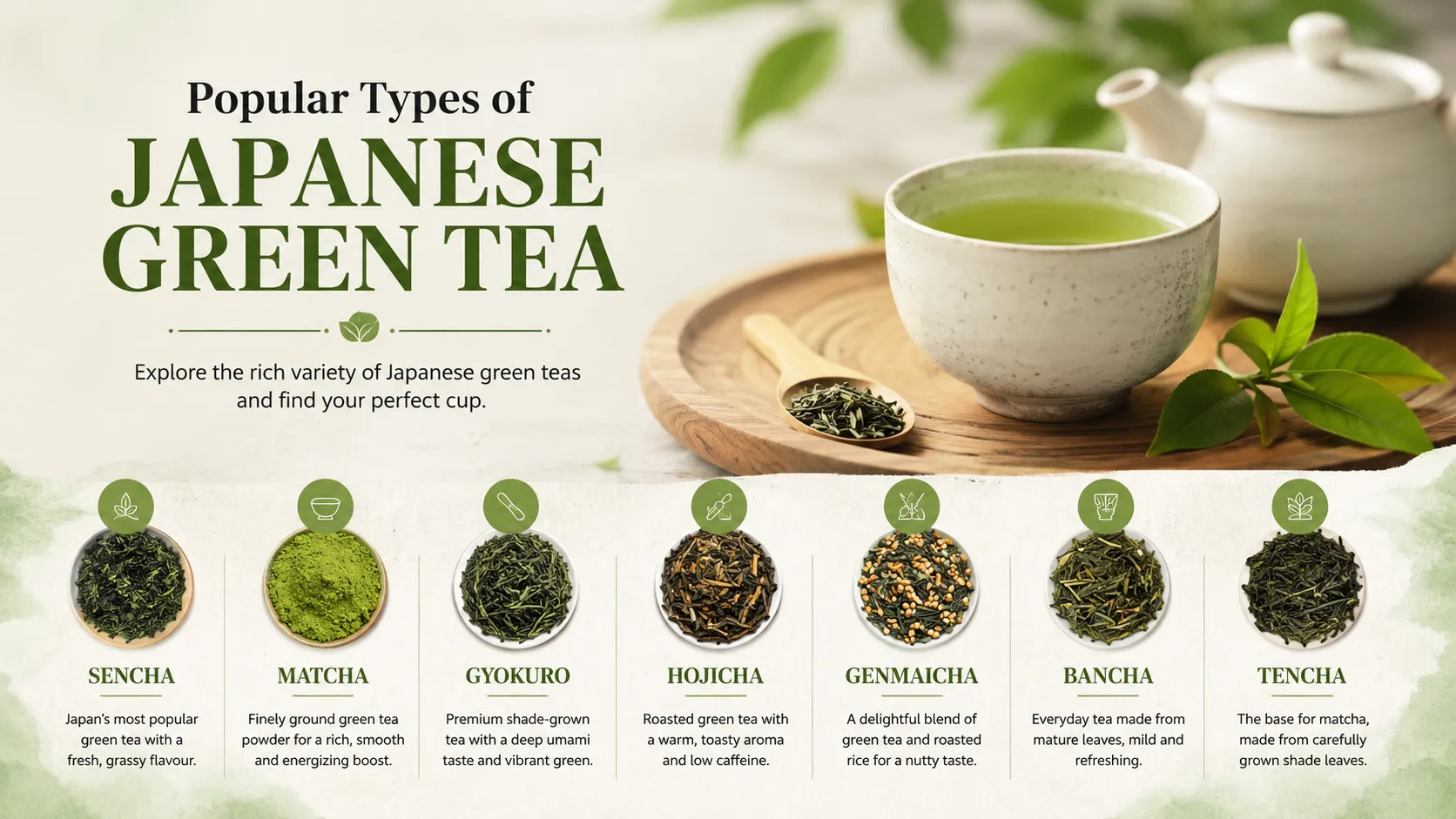
Whether you’re a wellness enthusiast seeking antioxidant-rich superfoods, a tea connoisseur exploring sophisticated flavor notes, or someone curious about authentic Japanese culture, understanding the different types of Japanese green tea is essential. This comprehensive guide explores seven major varieties—from the accessible everyday sencha to the ceremonial powerhouse matcha—revealing what makes each type distinctive, how to brew them perfectly, and which option best suits your palate and lifestyle.
The global premium tea market has recognized Japanese green tea’s exceptional quality, with demand growing steadily among health-conscious consumers worldwide. Let’s dive into the world of these extraordinary beverages.
WHAT MAKES JAPANESE GREEN TEA DIFFERENT?
The Japanese Tea Philosophy
Japanese green tea production follows principles rooted in Zen Buddhism and centuries of agricultural mastery. Unlike Chinese green teas processed with high heat, most Japanese green tea varieties are steamed—a technique that:
- Preserves chlorophyll (the compound giving tea its vibrant green color)
- Locks in antioxidants (particularly catechins and L-theanine)
- Develops umami flavor (savory, lingering taste)
- Maintains fresh, grassy aromatics
Key Differentiators
| Factor | Impact on Tea Quality |
|---|---|
| Shade-Growing | Increases chlorophyll and amino acids; reduces bitterness |
| Harvest Timing | First flush (spring) offers delicate sweetness; later harvests provide deeper flavors |
| Steaming Duration | Light steaming (asamushi) = fresh notes; deep steaming (fukamushi) = robust, full-bodied |
| Altitude | Higher elevations slow growth, concentrating flavor compounds |
| Water Quality | Soft, mineral-rich water from mountain sources enhances tea characteristics |
TOP 7 POPULAR TYPES OF JAPANESE GREEN TEA
1. SENCHA GREEN TEA: The Heart of Japanese Tea Culture
What Is Sencha?
Sencha is the quintessential type of Japanese green tea, representing approximately 80% of Japan’s total tea production. This non-shade-grown green tea delivers bright, vegetal notes with a refreshing finish and is the go-to choice for everyday consumption across Japanese households.
Characteristics:
- Appearance: Thin, needle-like leaves with a vibrant jade-green color
- Flavor Profile: Grassy, slightly sweet with citrus undertones
- Aroma: Fresh, invigorating with vegetal notes
- Caffeine Content: 25–70 mg per 8 oz cup
- Price Range: $8–$25 per ounce (premium grades)
Brewing Specifications:
- Water Temperature: 160–180°F (70–80°C)
- Steep Time: 2–3 minutes
- Tea-to-Water Ratio: 1 teaspoon per 8 oz water
Why Choose Sencha? Sencha offers an excellent entry point into Japanese green tea types. Its accessibility, affordability, and balanced flavor make it ideal for daily consumption. The variety is rich in polyphenols and provides sustained energy without the jitters associated with coffee.
2. MATCHA GREEN TEA: The Ceremonial Powerhouse
What Is Matcha?
Matcha represents the premium pinnacle of popular types of Japanese green tea, traditionally reserved for Japanese tea ceremonies (chanoyu). This shade-grown powder delivers an intense, concentrated dose of bioactive compounds in a single serving.
Characteristics:
- Appearance: Ultra-fine, vibrant emerald powder
- Flavor Profile: Rich umami, slightly sweet, minimal bitterness
- Aroma: Grassy, marine-like with floral notes
- Caffeine Content: 25–70 mg per serving (consumed entirely)
- Price Range: $5–$40+ per gram (ceremonial grade)
Two Matcha Grades:
| Grade | Appearance | Flavor | Best For |
|---|---|---|---|
| Ceremonial Grade | Bright emerald, fine powder | Smooth, sweet, complex | Traditional tea ceremonies, sipping |
| Culinary Grade | Duller green, coarser texture | More earthy, slightly bitter | Lattes, smoothies, baking |
Preparation Method:
- Add 1–2 teaspoons matcha powder to an empty bowl
- Pour 2 oz hot water (160–175°F / 70–80°C)
- Use a bamboo whisk (chasen) to create circular whisking motions
- Continue until foam forms and powder is fully dissolved (approximately 1 minute)
- Add remaining water (up to 8 oz) and enjoy
Why Choose Matcha? A single bowl of matcha delivers the nutritional equivalent of 10 cups of regular green tea. It provides L-theanine (promoting calm focus), EGCG antioxidants, and chlorophyll in one sitting. The ritualistic preparation also encourages mindfulness and presence.
3. GYOKURO GREEN TEA: The “Jewel Dew” Elite Variety
What Is Gyokuro?
Gyokuro (meaning “jewel dew”) ranks among the world’s most expensive and prized tea varieties. This shade-grown tea requires 20–30 days of shade cultivation before harvest, producing exceptional umami depth and sophisticated sweetness rarely found in other types of Japanese green tea.
Characteristics:
- Appearance: Dark green, glossy leaves with a silvery sheen
- Flavor Profile: Intensely sweet, rich umami, almost brothy sweetness
- Aroma: Complex, with marine and floral notes
- Caffeine Content: 30–50 mg per 8 oz cup
- Price Range: $25–$100+ per ounce (premium grades)
Cultivation Technique: Gyokuro farmers shade tea plants for roughly three weeks using bamboo frames and straw coverings. This controlled light reduction triggers plants to produce higher chlorophyll and amino acid concentrations (particularly L-theanine), resulting in extraordinary depth.
Brewing Specifications:
- Water Temperature: 50–60°C (122–140°F) — notably cooler than other varieties
- Steep Time: 90 seconds (shorter, careful steeping)
- Tea-to-Water Ratio: 1 teaspoon per 4–5 oz water (more concentrated)
Why Choose Gyokuro? This is the choice for serious tea enthusiasts and those seeking the most refined Japanese green tea experience. Gyokuro’s rarity, complexity, and ceremonial significance make it an investment in tea mastery. A single serving often costs $5–$15, but the experience justifies the expense.
4. GENMAICHA GREEN TEA: The Comforting Blend
What Is Genmaicha?
Genmaicha is a democratic blend combining sencha green tea with roasted brown rice (genmai), creating an approachable, nutty, and economical option among popular types of Japanese green tea. Often called “people’s tea,” it’s beloved across all age groups in Japan.
Characteristics:
- Appearance: Green tea leaves mixed with puffed, golden-brown rice kernels
- Flavor Profile: Toasted, nutty, slightly sweet with grassy notes
- Aroma: Warm, comforting grain and tea blend
- Caffeine Content: 12–35 mg per 8 oz cup (lower than pure sencha)
- Price Range: $5–$12 per ounce
Unique Benefits:
- Lower caffeine makes it suitable for evening consumption
- More affordable than pure green tea varieties
- Aids digestion due to roasted rice content
- Gluten-free (when sourced responsibly)
Brewing Specifications:
- Water Temperature: 160–180°F (70–80°C)
- Steep Time: 2–3 minutes
- Tea-to-Water Ratio: 1 tablespoon per 8 oz water (slightly more tea)
Why Choose Genmaicha? Perfect for those seeking a lighter caffeine option or preferring toasted, grain-forward flavors. Genmaicha’s comfort-food quality makes it ideal for relaxation, after-dinner sipping, or introducing friends to Japanese tea culture.
5. HOJICHA GREEN TEA: The Roasted Masterpiece
What Is Hojicha?
Hojicha (roasted green tea) undergoes a high-temperature roasting process, transforming typical green tea leaves into a rich brown variety. This type of Japanese green tea offers a completely distinct flavor profile compared to unroasted counterparts.
Characteristics:
- Appearance: Dark brown to nearly black leaves
- Flavor Profile: Deep, toasty, woody with caramel notes; minimal bitterness
- Aroma: Warm, roasted grain aroma similar to coffee
- Caffeine Content: 1–5 mg per 8 oz cup (extremely low)
- Price Range: $6–$15 per ounce
Processing Difference: While most Japanese green teas are steamed, hojicha is further roasted at 300–400°C. This roasting process:
- Dramatically reduces caffeine content
- Creates comforting, toasty flavors
- Improves digestibility
- Develops caramel and chocolate undertones
Brewing Specifications:
- Water Temperature: 160–180°F (70–80°C)
- Steep Time: 2–3 minutes
- Tea-to-Water Ratio: 1.5 teaspoons per 8 oz water
Why Choose Hojicha? Ideal for those sensitive to caffeine, seeking evening tea, or preferring warm, toasted flavor profiles. Hojicha’s gentle nature makes it suitable for children and elderly individuals. It pairs exceptionally well with desserts and offers digestive benefits.
6. KUKICHA GREEN TEA: The Stem Tea Treasure
What Is Kukicha?
Kukicha is crafted from the stems, branches, and twigs of the tea plant rather than leaves—making it a unique, underutilized type of Japanese green tea. This economical variety surprises many with its delicate sweetness and complex character.
Characteristics:
- Appearance: Thin, tan-colored stems with occasional leaves
- Flavor Profile: Delicately sweet, vegetal with slight umami
- Aroma: Fresh, subtle grass-like with hay undertones
- Caffeine Content: 5–15 mg per 8 oz cup (among the lowest)
- Price Range: $4–$10 per ounce (budget-friendly)
Why Kukicha Differs: Stems contain 97% less caffeine than leaves but retain flavor complexity. This makes kukicha ideal for:
- Late-night consumption
- Pregnant individuals (medical consultation recommended)
- Those sensitive to stimulants
- Budget-conscious enthusiasts
Brewing Specifications:
- Water Temperature: 160–180°F (70–80°C)
- Steep Time: 2–3 minutes
- Tea-to-Water Ratio: 2 teaspoons per 8 oz water
Why Choose Kukicha? This is the ethical, sustainable choice among types of Japanese green tea. Kukicha utilizes plant parts typically discarded, reducing waste. It’s also the most economical option, making authentic Japanese green tea accessible to budget-conscious consumers.
7. SHINCHA GREEN TEA: The First Harvest Premium
What Is Shincha?
Shincha (new tea) refers to green tea from the first spring harvest (late April to early May), marking the beginning of the Japanese tea season. This freshest type of Japanese green tea commands premium prices due to its vibrant flavor and limited availability.
Characteristics:
- Appearance: Vivid, deep green leaves with silvery tips
- Flavor Profile: Bright, sweet, with floral and fruit notes; minimal grassy quality
- Aroma: Intoxicating, complex with floral, fruity, and sweet undertones
- Caffeine Content: 30–50 mg per 8 oz cup
- Price Range: $15–$50+ per ounce (limited, seasonal)
Why Shincha Is Special:
- Limited availability: Only harvested once yearly for 3–4 weeks
- Peak flavor: First harvest produces the most refined taste
- Nutritional concentration: Highest amino acid content of the season
- Cultural significance: Celebrated across Japan with festivals and ceremonies
Brewing Specifications:
- Water Temperature: 150–160°F (65–70°C) — slightly cooler to preserve delicate notes
- Steep Time: 2 minutes (slightly shorter)
- Tea-to-Water Ratio: 1 teaspoon per 8 oz water
Why Choose Shincha? Perfect for special occasions, gifts, or tea ceremonies. Shincha represents the pinnacle of spring’s fresh energy and the Japanese tea farmer’s annual craftsmanship. Though pricey, the experience justifies the investment for tea enthusiasts.
COMPREHENSIVE COMPARISON TABLE
| Variety | Shade Time | Flavor | Caffeine | Price | Best For |
|---|---|---|---|---|---|
| Sencha | None | Bright, grassy | 25–70 mg | $8–$25/oz | Daily drinking |
| Matcha | 20–30 days | Umami, sweet | 25–70 mg | $5–$40/gram | Ceremonies, lattes |
| Gyokuro | 20–30 days | Intensely sweet, umami | 30–50 mg | $25–$100+/oz | Connoisseurs |
| Genmaicha | None | Toasted, nutty | 12–35 mg | $5–$12/oz | Evening sipping |
| Hojicha | None (roasted) | Toasty, woody | 1–5 mg | $6–$15/oz | Caffeine-sensitive |
| Kukicha | None | Delicately sweet | 5–15 mg | $4–$10/oz | Budget-conscious |
| Shincha | None | Bright, floral | 30–50 mg | $15–$50+/oz | Seasonal celebrations |
HEALTH BENEFITS ACROSS VARIETIES
All types of Japanese green tea deliver impressive health compounds, though concentrations vary by variety:
Universal Benefits (All Varieties)
Antioxidant Powerhouse
- EGCG (Epigallocatechin gallate): Japanese green tea contains 137 times more antioxidant power than regular green tea
- Supports cellular protection against oxidative stress
- May reduce risk of chronic diseases
L-theanine & Mental Clarity
- Promotes calm focus: L-theanine increases alpha brain waves without causing drowsiness
- Stress reduction: Paired with caffeine for smooth, sustained energy
- Enhanced concentration: Ideal for work and study sessions
Metabolism & Weight Management
- Boosts thermogenesis: May increase calorie burning by 3–8%
- Supports metabolic health: Particularly effective when consumed before exercise
Bone & Cardiovascular Health
- Fluoride content: Strengthens tooth enamel and bone density
- Heart support: May reduce risk of cardiovascular disease when consumed regularly
Variety-Specific Benefits
Matcha: Highest concentration of all beneficial compounds; entire leaf consumption delivers maximum nutritional value.
Gyokuro: Exceptional umami provides the highest L-theanine levels, promoting deeper relaxation and mental clarity.
Genmaicha: Brown rice content adds B vitamins, minerals, and aids digestion; lower caffeine makes it suitable for all day.
Hojicha: Roasting process creates novel antioxidant compounds; gentler on stomach; aids digestion and sleep.
Kukicha: Lower caffeine with retention of beneficial compounds; ideal for evening and sensitive individuals.
HOW TO CHOOSE THE RIGHT JAPANESE GREEN TEA FOR YOU
Assessment Questions
1. What’s your caffeine tolerance?
- High tolerance → Sencha, Matcha, Shincha (30–70 mg)
- Moderate tolerance → Gyokuro, Genmaicha (12–50 mg)
- Low/sensitive → Hojicha, Kukicha (1–15 mg)
2. When do you plan to drink it?
- Morning/daytime → Sencha, Matcha, Shincha
- Afternoon → Genmaicha, Gyokuro
- Evening → Hojicha, Kukicha
3. What flavor appeals to you?
- Grassy, bright → Sencha, Shincha
- Umami, savory → Matcha, Gyokuro
- Toasted, warm → Hojicha, Genmaicha
- Delicate, subtle → Kukicha
4. What’s your budget?
- Premium investment ($20+/oz) → Gyokuro, Shincha, high-grade Matcha
- Mid-range ($8–$15/oz) → Quality Sencha, Matcha, Hojicha
- Budget-friendly ($4–$10/oz) → Genmaicha, Kukicha
5. Are you interested in ceremonial preparation?
- Yes → Matcha, Gyokuro (require specific tools and techniques)
- No → Sencha, Genmaicha, Hojicha, Kukicha (standard brewing)
BREWING GUIDE FOR EACH TYPE
Universal Brewing Best Practices
✓ Use filtered or spring water (chlorine interferes with flavor)
✓ Preheat your teacup with hot water before brewing
✓ Use fresh tea within 6 months of purchase
✓ Never use boiling water (kills delicate flavors and beneficial compounds)
✓ Steep multiple infusions; Japanese teas often improve with re-steeping
Step-by-Step Brewing for Each Variety
SENCHA
- Heat water to 160–180°F (70–80°C)
- Add 1 teaspoon tea per 8 oz water
- Steep 2–3 minutes
- Pour into cups, serving immediately
- Re-steep leaves 2–3 additional times
MATCHA
- Sift 1–2 teaspoons matcha into a bowl
- Add 2 oz water at 160–175°F (70–80°C)
- Whisk vigorously in “M” motion until foamy (1 minute)
- Add remaining water; whisk gently
- Drink immediately for optimal foam
GYOKURO
- Heat water to 50–60°C (122–140°F) — use a thermometer
- Add 1 teaspoon per 4–5 oz water
- Steep exactly 90 seconds (use a timer)
- Pour entire contents into cups
- Re-steep leaves at slightly higher temperatures
GENMAICHA
- Heat water to 160–180°F (70–80°C)
- Add 1 tablespoon tea (more volume due to rice)
- Steep 2–3 minutes
- Serve and enjoy; re-steep 2–3 times
HOJICHA
- Heat water to 160–180°F (70–80°C)
- Add 1.5 teaspoons tea per 8 oz water
- Steep 2–3 minutes (can tolerate slightly longer steeping)
- Serve warm or chilled
- Re-steep multiple times
KUKICHA
- Heat water to 160–180°F (70–80°C)
- Add 2 teaspoons tea per 8 oz water (stems require more volume)
- Steep 2–3 minutes
- Serve and enjoy
- Re-steep 3–4 times (stems release flavor slowly)
SHINCHA
- Heat water to 150–160°F (65–70°C) — preserve delicate flavors
- Add 1 teaspoon per 8 oz water
- Steep 2 minutes (shorter to preserve subtle notes)
- Serve immediately
- Re-steep at gradually increasing temperatures
STORAGE & SHELF LIFE TIPS
Proper storage preserves the freshness, flavor, and nutritional value of your Japanese green tea types.
Storage Best Practices
Ideal Storage Conditions:
- Temperature: Cool, ideally 50–70°F (10–21°C)
- Humidity: Low (30–40% relative humidity)
- Light: Complete darkness; use opaque containers
- Oxygen: Minimize air exposure; use airtight containers
Container Recommendations:
| Container Type | Pros | Cons |
|---|---|---|
| Airtight tin | Protects from light and air; traditional | Can accumulate condensation |
| Ceramic with lid | Aesthetic, functional | Less airtight than tins |
| Vacuum-sealed bag | Excellent oxygen barrier | Single-use after opening |
| Dark glass jar | Reusable, protective | Requires opaque lid |
Shelf Life After Opening:
- Sencha: 4–6 months
- Matcha (powder): 1–2 months (refrigerate after opening)
- Gyokuro: 3–4 months (premium varieties degrade quickly)
- Genmaicha: 6–8 months
- Hojicha: 6–12 months (roasted varieties last longest)
- Kukicha: 8–12 months
- Shincha: 2–3 months (consume quickly; freshness is essential)
Extended Storage Options
For Long-Term Preservation:
- Store in refrigerator (32–40°F / 0–5°C) in airtight container
- Add silica gel packets to absorb moisture
- Label with purchase/opening date
- Keep away from aromatic foods (tea absorbs odors)
WHERE TO BUY AUTHENTIC JAPANESE GREEN TEA
Trusted Sources
Direct from Japan:
- Japanese Tea Importers: Specialized online retailers with direct relationships with Japanese tea farmers
- Official Cooperative Sites: Many Japanese prefectures operate direct-to-consumer tea sales
- Advantage: Freshness, authenticity, fair prices to farmers
Specialty Tea Retailers:
- Premium tea shops: Physical and online locations specializing in Japanese varieties
- Certifications to verify: Look for “Authentic Japanese Tea” designations and origin information
- Advantage: Expertise, quality curation, educational support
Farmers Markets & Tea Festivals:
- Seasonal availability: Spring shincha fairs; autumn tea markets
- Meet producers: Direct conversations with tea experts
- Advantage: Immediate freshness; opportunity to sample before purchasing
Authentication Tips
✓ Check origin: Labels should specify Japanese prefecture (Kyoto, Shizuoka, Yame, etc.)
✓ Review packaging: Authentic tea includes harvest date and tea master information
✓ Assess price realistically: Suspiciously cheap “premium” tea is likely inferior quality
✓ Verify vendor credentials: Established retailers offer guarantees and return policies
✓ Request certifications: Ask for organic, shade-grown, or specific cultivation documentation
FREQUENTLY ASKED QUESTIONS
What’s the difference between Japanese and Chinese green tea?
Japanese green teas are steamed, preserving their bright green color and fresh flavor. Chinese green teas are pan-roasted at high temperatures, developing more toasted, nutty notes. Japanese teas generally contain higher L-theanine levels and offer more umami complexity.
Can I drink Japanese green tea if I’m pregnant?
Most health authorities consider moderate Japanese green tea consumption safe during pregnancy due to lower caffeine content (consult your healthcare provider). Gyokuro and Matcha contain higher caffeine and should be limited. Hojicha and Kukicha are safest options with minimal caffeine.
How many times can I re-steep Japanese green tea leaves?
Most Japanese green teas can be re-steeped 3–5 times. Premium varieties like Gyokuro and Matcha improve with re-steeping, developing new flavor dimensions. Each infusion requires slightly higher water temperature and shorter steep time. Kukicha stems release flavor slowly and can be re-steeped 4–6 times.
Why is matcha so expensive compared to other green tea types?
Matcha commands premium prices due to specialized cultivation (20–30 days shade-growing), labor-intensive hand-harvesting, stone-grinding into fine powder, and its ceremonial significance in Japanese culture. Premium ceremonial-grade matcha represents months of careful farming and processing.
Is hojicha still considered “green tea” if it’s roasted brown?
Technically, hojicha is a processed green tea, though the roasting transforms its color and flavor. It contains the same beneficial compounds as other Japanese green tea types, simply in different concentrations due to heat processing.
What’s the best way to make iced Japanese green tea?
Cold-brew method: Add tea leaves to room-temperature water and refrigerate for 6–8 hours. This prevents bitterness and develops sweet, delicate flavors ideal for summer.
Hot-brewed chilled method: Prepare tea normally at proper temperature, then pour over ice. Consume within 30 minutes to avoid oxidation.
How much Japanese green tea should I drink daily?
General recommendation: 2–3 cups daily (approximately 200–300 mg L-theanine and 100–200 mg caffeine) provides health benefits without excess stimulation. Individual needs vary based on caffeine sensitivity, pregnancy status, and medication interactions. Consult healthcare providers for personalized guidance.
What’s the ideal water temperature, and why does it matter?
Water that’s too hot (195°F+) extracts excessive tannins, creating bitterness and destroying beneficial L-theanine. Optimal temperature (150–180°F / 65–80°C) extracts flavor compounds and antioxidants while preserving delicate aromatic notes. Use a thermometer for precision, especially with premium varieties.
Can I add milk or sweeteners to Japanese green tea?
Yes, though traditionalists avoid it. Japanese green tea’s delicate flavors pair better with minimal additions. If desired: honey complements floral notes, lemon enhances freshness, and milk softens slight astringency. Avoid sugar, which masks subtle flavor complexity.
Which Japanese green tea type is best for weight management?
Matcha offers the highest concentration of weight-management compounds (EGCG catechins). However, all Japanese green tea types provide similar metabolic benefits when consumed regularly (3+ cups daily). Consistency matters more than specific variety selection.
KEY TAKEAWAYS SUMMARY
| Takeaway | Implication |
|---|---|
| Variety selection depends on personal preference, caffeine tolerance, and lifestyle | Match tea type to your specific needs rather than defaulting to single variety |
| Water temperature precision (160–180°F / 70–80°C) is non-negotiable for optimal flavor | Invest in a simple thermometer; boiling water ruins expensive teas |
| Japanese green tea types are distinct; trying multiple varieties reveals personal preferences | Build a small collection to discover your favorite |
| Freshness degrades within 6–12 months after opening; storage method significantly impacts longevity | Proper storage in cool, dark, airtight containers extends shelf life dramatically |
| Authentic Japanese green tea commands premium pricing for valid reasons: cultivation techniques, craftsmanship, and nutritional density | Cheaper options exist but often sacrifice quality and authenticity |
| Regular consumption (2–3 cups daily) delivers proven health benefits: antioxidants, mental clarity, metabolism support | Make Japanese green tea a consistent ritual rather than occasional beverage |
| Ceremonial preparation (especially Matcha and Gyokuro) transforms tea-drinking into mindfulness practice | The ritual enhances benefits beyond the biochemical compounds |
CONCLUSION & CALL TO ACTION
Popular types of Japanese green tea represent centuries of agricultural wisdom, cultural refinement, and nutritional science converged into exceptional beverages. From the accessible everyday sencha to the ceremonial elegance of matcha, from the affordable comfort of genmaicha to the connoisseur-level complexity of gyokuro—each type of Japanese green tea offers unique flavor dimensions and health benefits worth exploring.
The global wellness movement has rightfully recognized Japanese green tea’s extraordinary value. With antioxidant concentrations, L-theanine’s cognitive benefits, and authentic cultivation practices, these varieties deliver tangible health returns alongside sensory pleasure. Whether you’re optimizing for mental clarity, supporting metabolic health, or simply seeking moment-to-moment presence, the right Japanese green tea type awaits discovery.
Next Steps:
1. Start Your Exploration: Begin with affordable, beginner-friendly options (Sencha or Genmaicha) to establish baseline preferences before investing in premium varieties.
2. Invest in Proper Equipment:
- Digital thermometer ($8–15)
- Airtight storage containers ($10–20)
- Tea infuser or strainer ($5–15)
- Bamboo whisk if interested in Matcha ($8–20)
3. Track Your Experience: Note flavor impressions, brewing parameters, and personal responses to different varieties. This data reveals your optimal tea match.
4. Deepen Your Knowledge: Explore Japanese tea regions (Kyoto’s Gyokuro, Shizuoka’s Sencha, Uji’s premium teas) to understand how terroir influences distinct types of Japanese green tea.
5. Join Tea Communities: Online forums, local tea shops, and Japanese cultural centers connect you with fellow enthusiasts and provide sourcing guidance.
The world of popular types of Japanese green tea invites you to slow down, savor sophistication, and invest in practices that nourish both body and mind. Your perfect cup awaits—begin your journey today.




[…] (notably EGCG), caffeine, L-theanine, chlorophyll and other antioxidants. These compounds are properties of the tea plant and its processing — shading, harvest timing and processing method influence their levels far more […]