By admin
Posted in ceremonial matcha, editor pick, matcha for gut health, Tea Education | Tags : gozen matcha, matcha for weight loss, Matcha Powder
Moment Tea Becomes Poetry
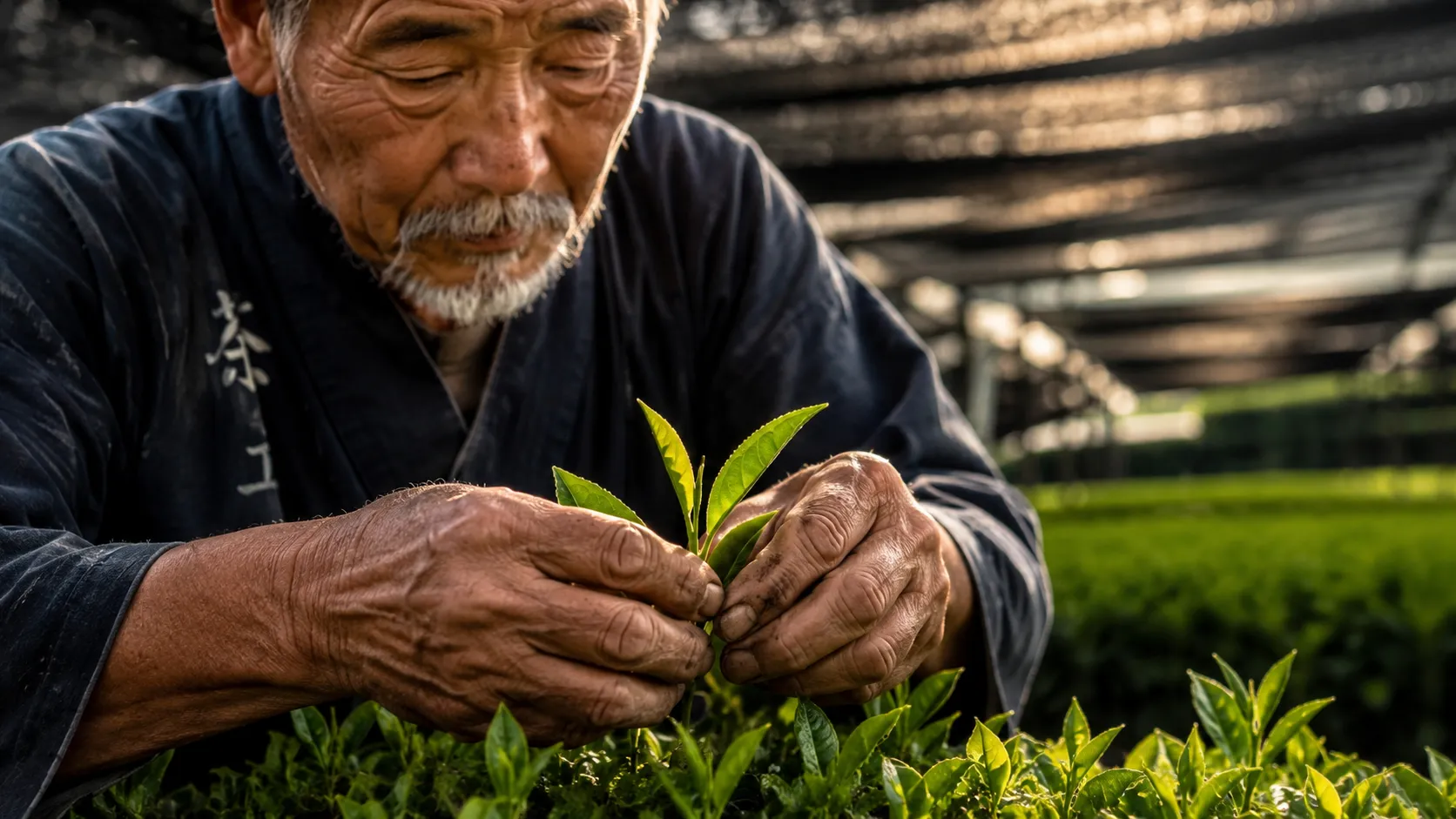
Imagine standing on a hillside at sunrise, watching golden mist drift across endless emerald tea fields while the scent of freshly picked leaves fills the air. The morning is so quiet you can hear water droplets collecting on each delicate leaf. A farmer in weathered gloves moves through the rows with practiced grace, running her fingers across the plant canopies, assessing the perfect moment of harvest. This isn’t a postcard fantasy. This is Kagoshima.
While most travelers rush to Kyoto’s bamboo groves or Tokyo’s neon-lit streets, they miss an extraordinary secret: Kagoshima, Japan’s southernmost prefectures, has quietly become one of the world’s most important sources of premium ceremonial matcha. For centuries, this region has produced some of Japan’s finest tea—yet few outside the tea world know its name.
The question isn’t whether Kagoshima grows great matcha. It’s why this hidden paradise has remained hidden for so long.
1. Why Kagoshima Is Japan’s Hidden Tea Capital
A Legacy Written in Volcanic Soil
Kagoshima’s tea story begins not in the cup, but in the earth. Located in Japan’s southern Kyushu region, Kagoshima sits on one of the planet’s most geologically dramatic landscapes. Active volcanoes like Sakurajima and Kinko Bay create a unique terroir that few tea regions can match.
The volcanic soil is rich in minerals—potassium, magnesium, and iron—that tea plants absorb and concentrate into their leaves. This mineral density isn’t decoration; it’s the foundation of Kagoshima’s distinctive, naturally sweet flavor profile. Agricultural experts call this minerality. Tea masters simply call it excellence.
Did You Know?
Kagoshima produces approximately 13% of Japan’s total tea, but accounts for an even larger percentage of the country’s premium ceremonial matcha. This small region has become a symbol of quality that rivals even the famous Uji region of Kyoto.
The Perfect Storm of Climate and Geography
What makes Kagoshima different isn’t just the soil. It’s the convergence of five climate factors:
Ocean Influence: The Kuroshio Warm Current flows along Kagoshima’s coast, moderating temperatures and creating humid conditions ideal for tea cultivation. This moisture-rich air is essential for shade-growing matcha, where plants need consistent humidity to develop the amino acid L-theanine that creates matcha’s signature umami sweetness.
Morning Mist and Mountain Valleys: Kagoshima’s tea-growing regions, particularly areas like Kyushu’s interior valleys, experience thick morning mists that persist well into the afternoon. This mist reduces direct sunlight—exactly what shade-grown matcha needs. When tea plants are shaded, they produce more chlorophyll (creating vibrant green color), more amino acids (creating sweetness), and less catechins (reducing bitterness).
Temperature Stability: Unlike northern Japanese tea regions that experience harsh winters, Kagoshima’s subtropical climate allows year-round cultivation and multiple harvests. Spring yields the most prized first flush, but Kagoshima’s longer season means quality teas throughout the year.
Seasonal Rainfall: The region receives consistent rainfall that fills underground aquifers, providing natural irrigation even during dry periods. Tea plants need deep, consistent water access to develop complexity.
Volcanic Mineral Content: This isn’t poetic language—it’s agricultural science. Volcanic ash from Sakurajima continuously enriches the soil, replenishing minerals that intense cultivation can deplete.
Tea experts and agricultural scientists who study Kagoshima often reach the same conclusion: the region’s combination of geology, climate, and geography creates conditions that are nearly impossible to replicate. This isn’t marketing. This is geography speaking.
2. Where Is Kagoshima? Your Geographic Introduction
Finding Japan’s Tea-Growing South
Kagoshima is located at the southern tip of Kyushu, Japan’s third-largest island. The prefecture stretches roughly 600 kilometers (370 miles) and includes the Izu Islands. For reference, Tokyo and Kagoshima are separated by approximately 1,000 kilometers—roughly the distance from New York to Chicago.
How to Get There
By Air: Kagoshima Airport (KOJ) receives direct flights from Tokyo (Haneda), Osaka (Kansai), and other major Japanese hubs. Flight time from Tokyo is approximately two hours. This makes Kagoshima accessible but distant enough to feel like a genuine escape.
By Rail: The Shinkansen (bullet train) connects Tokyo to Kagoshima-Chuo Station in about eight hours. This journey itself is an experience—watching Japan’s landscape transform from urban density to rural mountains and tea fields.
By Car: Renting a car from Kagoshima City is ideal for tea farm visits, as many plantation areas are in rural valleys not easily accessed by public transportation.
Best Seasons to Visit Kagoshima
| Season | Experience | Tea Harvest | Weather |
|---|---|---|---|
| Spring (March-May) | First flush matcha harvest, cherry blossoms, peak tea farm activity | Peak harvest period | Mild, misty mornings, 15-20°C |
| Summer (June-August) | Lush tea fields, summer festivals, humid tropical feel | Second harvest (June), slower activity | Hot, humid, 25-30°C |
| Autumn (September-November) | Clear skies, harvest season returns, comfortable temperatures | Third harvest (September-October) | Cool, crisp, 15-25°C |
| Winter (December-February) | Quiet countryside, minimal tourists, tea dormancy period | Minimal harvesting | Mild but cool, 5-15°C |
Travel Tip: Spring (April-May) is optimal. The first harvest has concluded, leaving time to visit farms while they prepare for summer. The weather is perfect, and the landscape is at peak vibrancy. Avoid Golden Week (late April) when Japanese domestic tourism surges.
3. Why Kagoshima Produces Extraordinary Matcha: The Science of Perfection
Understanding Matcha’s Growing Requirements
Matcha isn’t simply green tea ground into powder. Matcha follows a specific cultivation protocol refined over centuries. Understanding this process explains why Kagoshima produces such distinctive matcha.
Shade Cultivation (Tenryō): Approximately 20-30 days before harvest, matcha tea plants are covered with shade cloths (traditionally bamboo screens, now often dark netting). This shade reduces photosynthesis, triggering the plant to produce more chlorophyll to capture available light. The plant also boosts amino acid production—specifically L-theanine, which creates the creamy, umami-rich flavor that defines premium matcha.
In full sun, tea plants produce more catechins (antioxidants), which create astringency. In shade, the balance shifts toward sweetness and umami. Kagoshima’s naturally misty climate means shade-growing works in harmony with the geography rather than fighting against it.
Kagoshima’s Mineral Profile Advantage
The volcanic terroir isn’t just flavor poetry—it’s measurable chemistry. Tea from Kagoshima typically contains higher levels of:
- Potassium: Essential for plant growth and flavor development
- Magnesium: Creates the green color in chlorophyll
- Iron: Contributes to earthiness and complexity
- Sulfur Compounds: Responsible for umami taste
These minerals accumulate in tea leaves because Kagoshima’s volcanic soil is rich with them, and because Kagoshima farmers have practiced regenerative agriculture for generations—constantly returning organic matter to the soil.
The Harvest Advantage
Kagoshima’s tea harvest schedule creates quality advantages:
- First Flush (Ichibancha): Late April to early May. This is the most prized harvest, with the highest amino acid and lowest caffeine content. Kagoshima’s climate allows this harvest to come at the perfect moment of leaf maturity.
- Shade Application Timing: The mist-heavy climate of Kagoshima means shade cloths can be applied later in the season than in other regions, capturing more of the plant’s natural growth cycle.
- Consistent Growing Conditions: Unlike regions with dramatic temperature swings, Kagoshima’s subtropical stability means farmers can predict plant development with precision, timing harvest to exact leaf maturity stages.
4. The Secret Behind Kagoshima’s Ceremonial Matcha: From Field to Powder
The Tencha Process: Where Art Meets Science
Ceremonial matcha begins its transformation long before reaching your whisk. Here’s the journey:
1. Shade Application (Tenryō): 20-30 days before harvest, farmers cover tea plants with shade cloths. In Kagoshima’s traditionally farmed estates, this is still done with bamboo screens. Modern farms use food-grade shade netting. The effect is identical—plants boost amino acid production while reducing harsh tannins.
2. Harvesting (Picking): Premium matcha requires hand-picking, typically by skilled farmers who can identify individual leaves at perfect maturity. Kagoshima’s labor-intensive approach means pickers select only the youngest, most tender leaves and buds. This selective harvesting takes longer but produces leaves with superior flavor and nutrition.
3. Steaming (Aojira): Within hours of picking, leaves are steamed to stop oxidation. This preserves the bright green color and fresh flavor. Kagoshima farms typically use two distinct steaming methods—shallow steaming for a more delicate profile, deeper steaming for more pronounced umami. Premium farms adjust steaming duration based on weather conditions and leaf maturity that day.
4. Drying and Sorting: Steamed leaves are dried carefully, then sorted by size, quality, and color. Only the finest leaves become matcha. Lower grades become regular green tea. This stringent sorting is why premium matcha is expensive—only 15-20% of a tea plant’s annual growth becomes ceremonial-grade matcha.
5. Tencha Preparation: The dried leaves (called tencha) are briefly re-dried just before stone-grinding to remove residual moisture. This step is critical—too much moisture and the grinding stone becomes wet; too little and the leaves become brittle.
6. Stone-Grinding (Ishiutsugi): This is where Kagoshima’s artisan tradition shines. Premium matcha is ground on traditional granite mills, turning slowly—often taking 45 minutes to produce just 30 grams of powder. The slow speed generates minimal friction heat, preserving all the leaf’s nutritional qualities and vibrant color. Industrial ball mills finish in minutes but generate heat that degrades quality.
Travel Tip: If visiting a Kagoshima tea farm, ask to see the stone-grinding process. Many artisan producers still maintain these traditional granite mills, which are increasingly rare even in Japan. The sound—a gentle whooshing of stone against stone—is unmistakably beautiful.
Why Premium Matcha Looks Jade-Green
The bright, virtually luminescent green color of premium ceremonial matcha comes from:
- High Chlorophyll Content: Shade cultivation increases chlorophyll production by 25-40%
- Minimal Oxidation: Immediate steaming after harvest preserves chlorophyll (oxidation turns green leaves brown)
- Fine Particle Size: Stone-grinding creates powder so fine (2-5 microns) that light reflects differently than coarser powders
- Freshness: Older matcha oxidizes and dulls. Premium matcha is typically used within 6 months of production
This color isn’t artificial or cosmetic—it’s a direct indicator of quality, freshness, and proper processing.
5. Visiting Kagoshima Tea Farms: An Experience for All Five Senses
What to Expect During a Farm Visit
Walking through a Kagoshima tea plantation is unlike visiting vineyards or coffee farms. The sensory experience is immediate and profound.
Sight: The landscape first strikes you—endless rows of precisely manicured tea plants creating geometric patterns across hillsides. In spring, the young leaves glow almost neon-green. If visiting during shade cultivation season, the fabric creates a quilted appearance over portions of the field.
Sound: Initially, quiet. But then you notice everything: wind moving through tea leaves, birds calling from nearby forests, the soft footsteps of farmers moving between rows, and if you’re lucky, water running through irrigation channels.
Smell: The aroma of fresh tea leaves is grassy and green initially, with subtle floral notes. Dried leaves smell deeper and more complex. If visiting during processing season, you’ll encounter the distinct, almost savory smell of steaming tea.
Taste: Most tea farms offer tastings. The contrast between shade-grown matcha and sun-grown green tea is revelatory. Matcha coats your mouth with creaminess and umami. Regular green tea tastes more herbaceous and crisp. Try them side-by-side and the difference becomes undeniable.
Touch: Running your hand across tea plants reveals their delicate nature. Leaves are softer than you’d expect. Holding freshly harvested leaves (if the farm permits) gives you a sense of their weight and flexibility.
Best Tea Farm Experiences in Kagoshima
Kirishima Tea Plantations: Located in the Kirishima mountain region, these farms sit at elevation that amplifies the mist effect. Many offer morning farm tours ending with tea ceremony experiences in traditional farmhouse settings.
Aira Tea Village: A collective of family farms in the Aira region that welcomes visitors. Here you can participate in actual harvesting (seasonally), watch stone-grinding, and learn directly from farmers who’ve been cultivating tea for generations.
Yusui Tea Region: Known for organic and sustainable farming practices, Yusui has emerged as Kagoshima’s premium ceremonial matcha heartland. Several farms offer immersive experiences including staying overnight in farmer’s homes.
Photography Tip: Early morning, 30-45 minutes after sunrise, offers the most photogenic conditions. The mist rises from valleys, light angles through tea rows, and the green color is most vibrant. Bring a wide-angle lens—the scale of these tea fields is immense.
6. Best Tea Experiences in Kagoshima: Beyond the Farm
Immersive Tea Experiences
Kagoshima City Tea Museum: While not in the countryside, this museum contextualizes what you’ll see in farms. It covers the history of Kagoshima tea, ancient cultivation techniques, and modern production methods. Allow 2-3 hours.
Tea Ceremony at Traditional Tea Houses: Several farm villages maintain traditional chaniwa (tea houses). A proper tea ceremony (chadō) is a meditative experience where a trained practitioner prepares matcha with deliberate, choreographed movements. This isn’t entertainment—it’s a spiritual and artistic practice. Expect to spend 90 minutes and feel genuinely transformed.
Seasonal Tea Festivals:
- Spring Tea Festival (May): Celebrates the first harvest with vendor stalls, demonstrations, and tastings.
- Autumn Moon Tea Celebration (September): Connects tea with traditional moon-viewing customs.
Private Tea Tasting Experiences: Premium farms offer curated tastings comparing different harvest times, shade durations, and processing techniques. These typically cost $80-150 per person and provide profound education about what creates matcha’s flavor variation.
Tea Pairing Experiences
Kagoshima’s local cuisine pairs beautifully with ceremonial matcha:
- Matcha with Mochi: Soft rice cakes (often filled with sweet red bean paste) complement matcha’s umami perfectly. The contrast between chewy mochi and creamy matcha is textural poetry.
- Matcha with Wagashi: Traditional Japanese sweets made with minimal ingredients (often just beans, rice, and sugar) are designed to highlight matcha’s flavor without competition.
- Matcha with Yuzu or Citrus: Kagoshima grows citrus alongside tea. Citrus’s brightness balances matcha’s earthy depth.
7. Hidden Places: Where Tourists Never Venture
Secret Tea Villages Worth Finding
Chiran Tea Village: Not on most tourism maps, Chiran sits in a valley where morning mist lingers until late morning. Walking the narrow lanes between family tea farms feels like stepping back 50 years. A small shrine at the village center often stands completely empty—perfect for quiet contemplation.
Sakurajima’s Northern Slopes: While most visit Sakurajima (the active volcano) for the volcano itself, the northern slopes are covered in tea farms. Taking a local bus to the rural northern side and walking among farms is genuinely adventurous travel. Few Western tourists go here.
Tea Roads (Chaji Michi): Kagoshima maintains old walking trails that historically connected tea-producing villages. Several sections remain walkable. The Kirishima Tea Road, in particular, offers 8-10 kilometers of hiking through active tea farmland with minimal tourism infrastructure.
Hidden Tea Merchants: In Kagoshima City’s older neighborhoods, family tea shops that have operated for 50+ years sell directly to locals. These shops don’t advertise; they’re discovered through wandering. The tea here is often fresher and more affordable than tourist-oriented shops.
Travel Tip: Venture into neighborhoods where signs are only in Japanese and no English menus exist. This is where authentic Kagoshima reveals itself.
8. Kagoshima’s Local Food: The Perfect Matcha Pairing
Wagashi: The Art of Restraint
Traditional Japanese sweets (wagashi) are designed with matcha in mind. Made from minimal ingredients—often just azuki beans, rice flour, and sugar—wagashi highlight rather than compete with matcha’s flavor.
- Dorayaki: Red bean paste between two spongy cakes. The subtle sweetness allows matcha’s umami to shine.
- Mochi: Soft, chewy rice cakes that provide textural contrast to matcha’s smoothness.
- Yokan: Dense sweet bean jelly. A small slice (about 3cm) provides concentrated sweetness that balances matcha’s slight bitterness.
- Taiyaki: Fish-shaped pastries filled with red bean. The crispy outside and creamy filling pair beautifully with whisked matcha.
Savory Kagoshima: Kurobuta and Beyond
Beyond sweets, Kagoshima’s culinary reputation rests on:
Kurobuta Pork: Black-haired pork raised in Kagoshima is celebrated throughout Japan. The meat’s richness is cut beautifully by matcha’s refreshing qualities. Try matcha-salt grilled kurobuta at upscale Kagoshima restaurants.
Fresh Seafood: Being coastal, Kagoshima’s seafood is exceptional. Grilled fish and matcha create an unexpected harmony—the umami of seafood meeting the umami of matcha creates profound depth.
Kagoshima Beef: While not as famous internationally as Kobe or Wagyu, Kagoshima beef is exceptional. The marbling and tenderness suggest those more famous varieties.
The Matcha Aesthetic in Modern Kagoshima
Contemporary Kagoshima restaurants are reinterpreting matcha beyond tradition. Matcha lattes, matcha noodles, matcha ice cream, and matcha cocktails have emerged. These aren’t necessarily purist, but they’ve introduced younger generations to matcha flavor.
9. Why Luxury Matcha Brands Source From Kagoshima
The Quality Question: Why Here?
When premium matcha brands globally source their core supply, Kagoshima consistently appears in their procurement chain. This isn’t coincidence. It’s geography and tradition converging:
Consistency: Kagoshima’s climate variability is low compared to other regions. This predictability means farmers can adjust practices based on precise understanding of seasonal patterns. Year to year, Kagoshima matcha maintains remarkable consistency—a critical factor for luxury brands whose customers expect identical quality in every purchase.
Traceability: The region’s consolidated farming community means supply chains are traceable. Premium brands can often identify exactly which farm, which field, and which harvest produced their matcha. This transparency is increasingly important to luxury consumers.
Organic Farming Prevalence: Kagoshima has a higher percentage of organic and sustainable tea farms than most other Japanese regions. Approximately 23% of Kagoshima tea is organically certified, compared to 8% nationally. This alignment with modern luxury sustainability values makes Kagoshima naturally attractive to premium brands.
Artisan Heritage: Kagoshima’s tea culture remains deeply connected to family farms and artisanal methods. Large-scale industrialization hasn’t erased traditional knowledge. Premium brands value this continuity.
Flavor Profile: The naturally sweet, creamy, umami-forward profile of Kagoshima matcha requires less processing and fewer additions to taste premium. Inferior matcha often requires sweeteners or flavorings to become palatable. Kagoshima’s terroir creates baseline quality that speaks for itself.
10. How Premium Matcha Reaches Your Cup: The Gozen Samurai Difference
Sourcing Excellence from Kagoshima
When a luxury matcha brand commits to sourcing from Kagoshima, every decision that follows reflects that foundation. Here’s how premium matcha journeys from farm to home:
Direct Relationships: Premium matcha brands work directly with small-scale Kagoshima farmers, often for years. These relationships mean brands understand soil conditions, farming practices, and each season’s variables. Gozen Samurai’s sourcing model involves these direct connections, ensuring every batch traces back to specific Kagoshima farms and known cultivation methods.
Seasonal Awareness: Understanding that April’s first flush differs fundamentally from June’s second harvest, premium brands time their sourcing to specific harvest windows. The absolute best ceremonial matcha comes from the first harvest (ichibancha). Premium brands wait for this window rather than selling year-round to maintain quality standards.
Stone-Grinding Commitment: Industrial ball mills can grind matcha in minutes. Traditional stone mills take 45 minutes per 30 grams, generating minimal heat that preserves nutrients and color. Premium matcha brands specify stone-ground processing—a choice that doubles production time and cost but delivers undeniable quality difference.
Freshness Standards: Unlike coffee or wine, matcha degrades rapidly. Exposure to air, light, and warmth oxidizes the powder and dims its color. Premium brands invest in nitrogen-sealed packaging and recommend consumption within 30-60 days of milling. This freshness obsession is what separates premium matcha from commodity matcha that can sit in warehouses for months.
Rigorous Testing: Every batch of premium matcha undergoes organoleptic testing (tasting by trained experts) and chemical analysis (verifying amino acid profiles and contaminant absence). Inferior matcha skips these steps. Premium brands don’t.
11. Complete Kagoshima Tea Itineraries: From 3 Days to 5 Days
3-Day Itinerary: The Essentials
Day 1: Arrival & Kagoshima City Orientation
- Arrive at Kagoshima Airport, transfer to central Kagoshima City
- Visit Kinko Bay for sunset views (active Sakurajima volcano visible across the bay)
- Dinner at traditional restaurant featuring kurobuta and local seafood
- Evening tea at specialty shop in Tenmonkan district
Day 2: Farm Immersion
- Early morning drive to Kirishima Tea Region (45 minutes)
- Guided tea farm tour with hands-on harvesting experience (seasonal)
- Lunch at farm restaurant featuring local matcha-infused dishes
- Afternoon: Tea ceremony experience at traditional tea house
- Return to Kagoshima City for evening at leisure
Day 3: Deeper Experience & Departure
- Morning visit to Kagoshima City Tea Museum
- Matcha tasting class comparing different grades and harvest times
- Shopping for premium matcha and tea accessories
- Departure toward airport with time for last-minute exploration
5-Day Itinerary: The Premium Experience
Day 1: Arrival & Orientation
- Afternoon arrival, settle into ryokan (traditional inn)
- Evening stroll through Tenmonkan shopping district
- Dinner featuring Kagoshima specialties
Day 2: Introduction to Tea Culture
- Morning: Kagoshima City Tea Museum (2-3 hours)
- Lunch at museum café (matcha focused)
- Afternoon: Introductory tea ceremony lesson
- Evening: Private matcha tasting at specialty shop
Day 3: Deep Farm Experience
- Full day in Kirishima Tea Region
- Morning: Detailed farm tour with farmer interview
- Midday: Participate in tea processing workshop
- Afternoon: Harvest (if seasonal) or hands-on shade cloth application
- Evening: Dinner at farm accommodation with farm family
Day 4: Advanced Experiences
- Morning: Stone-grinding workshop (learn traditional matcha production)
- Afternoon: Hike Kirishima Tea Road with picnic lunch
- Evening: Advanced tea ceremony at master-led tea house
- Night: Reflection time at onsen (hot spring bath)
Day 5: Refinement & Departure
- Morning: Matcha aesthetic photography class (capturing beautiful matcha photos)
- Lunch: Matcha-paired meal at Michelin-recognized restaurant (if available)
- Afternoon: Final shopping and packing
- Departure with new understanding of Kagoshima’s role in tea world
Tea Lover’s Focused Itinerary (4 Days)
- Day 1: Arrival, city orientation, introductory tea experience
- Day 2: Full-day farm tour with multiple farm visits, harvesting participation
- Day 3: Processing workshops (steaming, drying, stone-grinding), tea ceremony
- Day 4: Advanced tastings, market exploration, departure
12. Best Time to Visit Kagoshima: A Seasonal Guide
Spring (March-May): Peak Tea Season
This is unquestionably the best time for tea-focused travel.
- First Harvest: Late April to early May, the year’s most important tea harvest occurs. Farms are intensely active. The atmosphere is electric.
- Weather: Mild, typically 15-20°C (59-68°F). Morning mist is reliable. Humidity is comfortable.
- Crowds: Japanese domestic tourism increases during Golden Week (late April-early May), so book accommodations early.
- Activities: Farm harvesting, tea ceremonies, farm-to-table experiences all peak now.
Summer (June-August): Tropical and Quieter
- Second Harvest: June brings the second tea flush, less prized but still high quality
- Weather: Hot and humid, 25-30°C (77-86°F). Afternoon rainstorms common.
- Advantage: Fewer tourists. Farms are quieter. Prices lower than spring.
- Challenge: Heat can make farm exploration uncomfortable. Early morning starts essential.
Autumn (September-November): Return of Perfection
- Third Harvest: September-October brings another quality harvest
- Weather: Ideal—cool and crisp, 15-25°C (59-77°F). Clear skies. Minimal rain.
- Landscape: Tea fields are lush. Occasional autumn leaves appear on nearby trees.
- Advantage: Combines spring’s harvest activity with summer’s lower crowds. Often overlooked by tourists.
Winter (December-February): Contemplative and Quiet
- Dormancy Period: Tea plants rest. Harvesting essentially stops.
- Weather: Mild but cool, 5-15°C (41-59°F). Occasional rain. Rarely freezes.
- Advantage: Extreme peace. Locals outnumber tourists 100-to-1. Rates are lowest.
- Challenge: Limited farm activities. Tea processing has concluded.
- Opportunity: Perfect for deep reflection, studying tea history, and connecting with elderly farmers’ wisdom.
Travel Tip: Book spring visits 3-4 months in advance. For summer, autumn, and winter, 6-8 weeks ahead is typically sufficient. The spring-to-autumn window (March-November) is genuinely ideal for first-time Kagoshima visitors.
Comparison Table: Kagoshima vs. Uji Matcha
| Factor | Kagoshima Matcha | Uji Matcha |
|---|---|---|
| Region | Southern Kyushu, volcanic terroir | Kyoto Prefecture, limestone-based soil |
| Flavor Profile | Naturally sweet, creamy umami, minimal bitterness | Herbaceous, slightly grassy, more complex |
| Amino Acid Content | Higher L-theanine (sweeter) | Balanced amino acid profile |
| Color | Bright jade-green | Deep forest green |
| Mouthfeel | Creamy, coating | Cleaner, crisper |
| Production Scale | Smaller family farms, artisanal focus | Mix of artisanal and industrial |
| Price Range | $30-80 per 30g (premium) | $25-70 per 30g (premium) |
| Best For | First-time matcha drinkers, sweetness preference | Tea ceremony purists, complex flavor seekers |
| Tourism Infrastructure | Developing, more authentic | Established, more tourist-oriented |
| Terroir Expression | Volcanic minerals very present | Limestone minerals subtly present |
Both regions produce exceptional matcha. Kagoshima excels at naturally sweet, accessible profiles. Uji excels at layered complexity. Personal preference determines superiority.
What Makes Kagoshima Matcha Different?
Kagoshima is Japan’s second-largest tea-growing region after Shizuoka, but it is far less famous internationally than Uji in Kyoto. Its warmer climate and longer growing season allow for an earlier harvest and a broader range of cultivars.
Compared with Uji’s more traditional umami-forward profile, Kagoshima matcha often has a bolder, slightly sweeter character, although flavour ultimately varies by cultivar, harvest, shading, processing and producer.
Want to compare the two regions in more detail?
→ Read our full comparison:
Kagoshima vs Uji Matcha
13. Frequently Asked Questions About Kagoshima Matcha
Q1: Is Kagoshima actually famous for matcha?
Yes. While Uji (Kyoto) has greater historical prestige, Kagoshima now produces approximately 13% of Japan’s tea and a disproportionately large percentage of premium ceremonial matcha. Most quality-focused buyers and premium brands source from Kagoshima. It’s becoming Japan’s rising star in premium matcha production.
Q2: Why is Kagoshima tea so good?
Four factors converge: (1) Volcanic mineral-rich soil, (2) Subtropical climate with consistent mist and humidity, (3) Multi-generational artisanal farming traditions, (4) Geographic conditions ideal for shade cultivation. This combination is difficult to replicate globally.
Q3: When is tea harvesting season in Kagoshima?
First flush (premium): Late April-early May. Second flush: June. Third flush: September-October. Winter is dormancy. First flush is most prized.
Q4: Can tourists visit tea farms in Kagoshima?
Yes. Many farms welcome visitors with advance booking. Visits typically include farm tours, tastings, and sometimes harvesting participation. Booking through your accommodation or contacting Kagoshima tourism directly facilitates visits.
Q5: How do I buy authentic Kagoshima matcha?
Look for: (1) Clear traceability to Kagoshima region, (2) Stone-ground specification, (3) Recent harvest date (within 6 months), (4) Bright jade-green color, (5) Vacuum or nitrogen-sealed packaging, (6) Certification marks indicating quality grading.
Q6: What makes ceremonial matcha different from culinary matcha?
Ceremonial matcha comes from the plant’s youngest leaves, undergoes careful processing, contains higher amino acid content, requires stone-grinding, and is meant to be whisked with water. Culinary matcha comes from lower-quality leaves and is used in lattes, baking, or smoothies. The flavor and color differences are significant.
Q7: Is Kagoshima matcha better than Uji matcha?
“Better” depends on preference. Kagoshima excels at natural sweetness and umami. Uji excels at complexity. Many connoisseurs appreciate both for different reasons. Neither is objectively superior.
Q8: What’s the price difference between ceremonial and culinary matcha?
Premium ceremonial matcha costs $30-80 per 30 grams. Culinary matcha costs $8-20 per 30 grams. The 3-4x price difference reflects superior leaf quality, careful processing, and freshness standards.
Q9: How should I store matcha to maintain freshness?
Keep matcha in an airtight container (vacuum-sealed ideal) in a cool, dark place. Refrigerator storage extends freshness. Avoid direct sunlight. Consume within 30-60 days of opening. Unopened, properly stored matcha lasts 6-12 months.
Q10: How do I prepare ceremonial matcha correctly?
(1) Heat water to 70-80°C (160-180°F)—not boiling.
(2) Place 1-2 teaspoons matcha in bowl.
(3) Add small amount of hot water.
(4) Whisk vigorously with bamboo whisk until frothy (about 30 seconds).
(5) Add remaining water while whisking. (6) Drink immediately.
Q11: Does matcha contain caffeine?
Yes. A single serving contains 25-70 mg caffeine (depending on preparation), compared to 95-200 mg in coffee. Matcha’s caffeine is absorbed more slowly due to amino acid (L-theanine) content, creating sustained energy without jitters.
Q12: Why is Kagoshima matcha so expensive compared to other green teas?
Premium matcha requires: (1) Shade cultivation (labor-intensive), (2) Hand-harvesting of only youngest leaves, (3) Careful processing with minimal oxidation, (4) Stone-grinding (45 minutes per 30g vs. 3 minutes industrial), (5) Rigorous quality testing. These factors justify premium pricing.
Q13: What does “ceremonial grade” mean officially?
Ceremonial grade is a Japanese classification indicating matcha suitable for traditional tea ceremony (chadō). It requires: highest color vibrancy, smoothest texture, superior amino acid profile, zero grittiness, and absence of defects. Regulations vary slightly by origin but are generally strict.
Q14: Can I make matcha lattes with ceremonial matcha?
Technically yes, but it’s wasteful. Heating ceremonial matcha above 80°C degrades delicate amino acids. Culinary matcha is formulated to withstand higher temperatures. Using ceremonial matcha for lattes is financially inefficient (like using single-malt whisky in a cocktail).
Q15: Where does Gozen Samurai source its matcha?
Gozen Samurai sources premium ceremonial matcha exclusively from small-scale Kagoshima farms, prioritizing organic and sustainable practices. Our matcha undergoes rigorous quality testing and stone-grinding, reflecting our commitment to authenticity and premium positioning.
Q16: How is Gozen Samurai matcha different from other brands?
Gozen Samurai emphasizes: direct sourcing from Kagoshima’s finest farms, transparent traceability, stone-ground processing, commitment to freshness (vacuum-sealed, harvest-dated), and authentic quality without compromises. Our brand reflects the terroir and artisanal traditions of Kagoshima itself.
Q17: Is organic matcha better than conventional?
Organic matcha avoids synthetic pesticides and fertilizers, appealing to health-conscious consumers. Quality-wise, excellent organic and conventional matcha both exist. Kagoshima has high percentage of organic farms (23%), making organic matcha more accessible here than other regions.
Q18: What’s the taste difference between first flush and later harvests?
First flush (spring): brightest color, sweetest flavor, creamiest mouthfeel, highest amino acid content. Second flush (early summer): slightly less sweet, more grassy. Third flush (early autumn): more astringent, stronger earthiness. Most ceremonial matcha comes from first flush.
Q19: Can I grow matcha at home?
Tea plants require specific climate (subtropical), 2-3 years to mature, careful shade management, and expertise. Home cultivation is impractical for most people. Premium sourcing from Kagoshima is more practical than attempted home growing.
Q20: How has Kagoshima’s tea reputation evolved?
For decades, Uji (Kyoto) dominated Japan’s tea prestige. In recent 20 years, Kagoshima has risen dramatically due to superior consistency, terroir advantages, and farmers’ adoption of quality-first practices. Many quality-focused brands now source equally from or prefer Kagoshima. The region’s evolution from “secondary” to “premium” represents agriculture’s future.
Final Thoughts: Where Luxury Begins With Stillness
Luxury doesn’t always mean expensive hotels or exclusive restaurants. Sometimes luxury means standing alone in an emerald tea field at dawn, watching mist rise from valleys while farmers begin their daily work. It means tasting matcha whisked with water so pure it has no flavor of its own—just the tea expressing itself. It means connecting to a tradition so old that entire civilizations have passed while tea plants continue their quiet work.
Kagoshima offers this kind of luxury. It’s not advertised in glossy magazines because it hasn’t needed to be. Word of mouth among true tea enthusiasts has quietly positioned Kagoshima as the source of Japan’s finest matcha. This isn’t aspirational marketing. This is geography speaking, agriculture speaking, and centuries of accumulated knowledge speaking.
When you taste premium matcha, you’re tasting the convergence of volcanic minerals, subtropical mist, and artisanal hands moving through tea rows with practiced grace. You’re tasting Kagoshima.
Explore our Kagoshima matcha collection and taste why this hidden capital has become the world’s most trusted source of premium ceremonial matcha.
Your morning ritual awaits. Kagoshima is ready to greet you.




No comments yet.