
By admin
Posted in japanese matcha, premium matcha | Tags : cold matcha, gozen matcha, hot matcha, Matcha Powder, microbiome Matcha
Pour the same scoop of Japanese matcha into warm water one morning and cold water the next, and you may notice something surprising: it doesn’t taste quite the same. The powder is identical, the ratio is identical, yet the experience shifts. So, does temperature really change the taste of matcha?
The short answer is yes — water temperature has a real, noticeable effect on how matcha’s sweetness, bitterness, umami and aroma come across, even though the matcha itself hasn’t changed. This article walks through why that happens, what hot and cold matcha each taste like, how to prepare both properly, and how to decide which one suits you.
Does Temperature Really Change the Taste of Matcha?
Temperature affects how our senses perceive flavour long before it affects the matcha itself. Warmer liquids tend to release aromatic compounds more readily, which is part of why hot matcha often feels more fragrant and layered. Cooler temperatures, by contrast, can mute some aromatics while making a drink taste crisper and cleaner on the palate.
This interplay shows up across several dimensions:
- Sweetness – often perceived as slightly more present in cooler preparations, partly because bitterness and astringency can feel more muted
- Bitterness – tends to become more pronounced at higher temperatures, especially with very hot water
- Umami – the savoury, rounded quality prized in high-grade matcha, generally comes through more clearly when warm
- Aroma – heat encourages more volatile aromatic compounds to reach your nose
- Astringency – the dry, puckering sensation associated with catechins can intensify with excessive heat
- Mouthfeel – warm matcha often feels fuller and creamier when whisked properly, while cold matcha feels lighter and more brisk
None of this means one temperature is scientifically “better” — it means each brings out different aspects of the same tea.
What Does Hot Matcha Taste Like?
Traditionally prepared warm matcha is where much of Japanese tea culture’s attention to umami and aroma comes through most clearly. When whisked with appropriately heated water, high-quality matcha tends to show a rounded sweetness, a gentle vegetal note, and a savoury depth that’s often described as umami.
Warm water helps release these aromatic and umami qualities, which is part of why hot matcha is the standard in traditional tea ceremony settings. However, water that’s too hot can push things too far — pulling out excess bitterness and astringency and masking the more delicate flavours underneath. This is one reason precise water temperature matters so much in traditional preparation.
What Does Cold Matcha Taste Like?
Cold matcha offers a different kind of experience: crisper, lighter and often more refreshing. Lower temperatures tend to soften the perception of bitterness and astringency, which can make the tea taste smoother and, to some palates, slightly sweeter.
At the same time, some of the aromatic complexity that hot water draws out is less pronounced when matcha is prepared cold. Cold matcha still carries the tea’s core character, but it tends to present a cleaner, more streamlined version of it — which is exactly why it works so well as an everyday refreshing drink, especially in warmer weather.
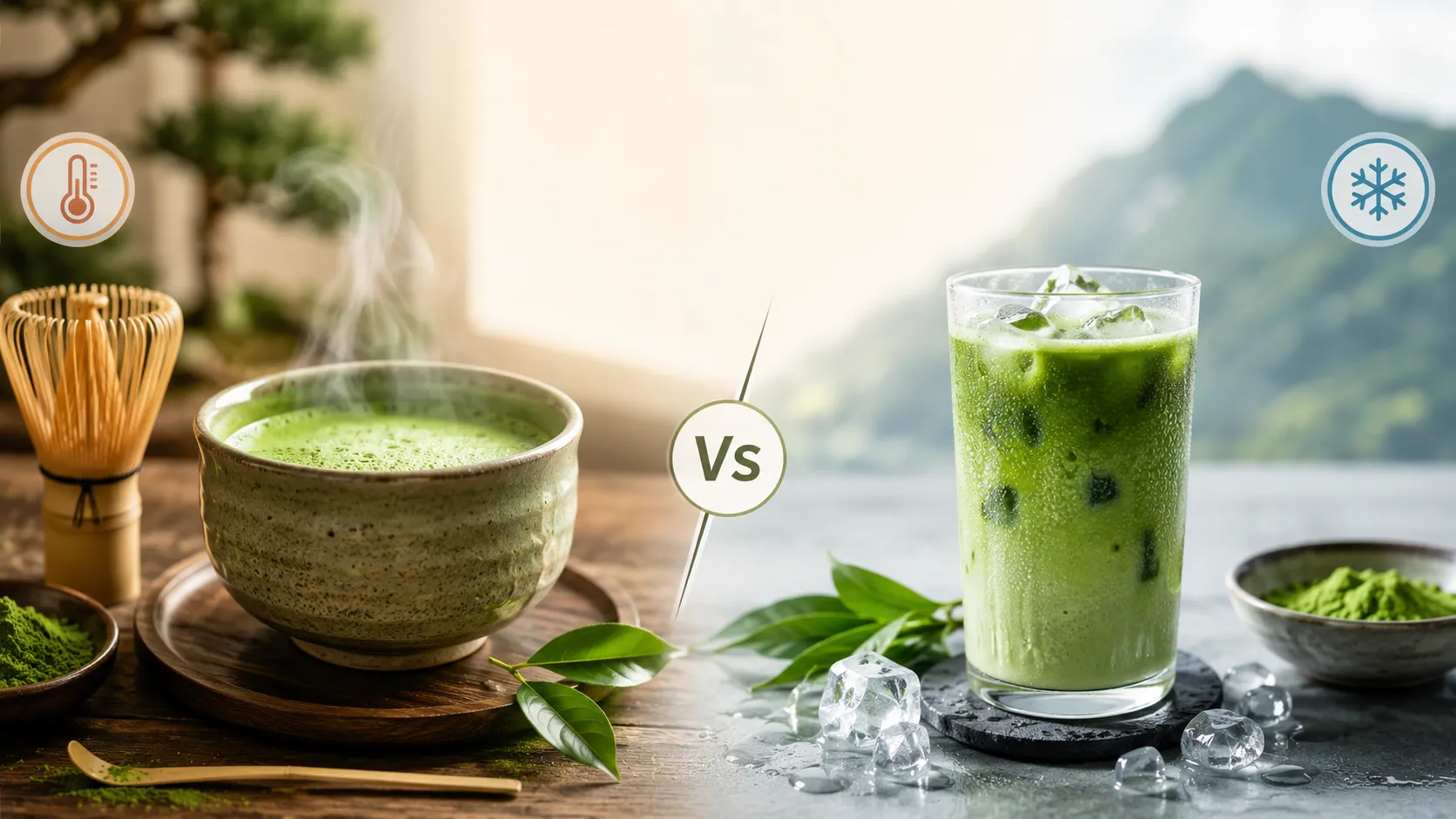
Hot Matcha vs Cold Matcha – Quick Comparison
| Factor | Hot Matcha | Cold Matcha |
|---|---|---|
| Taste | Rounded, layered, often sweeter with depth | Crisp, clean, lighter on the palate |
| Aroma | More pronounced and fragrant | Softer, more subtle |
| Bitterness | Can be more noticeable, especially if water is too hot | Generally softened |
| Umami | Comes through strongly | Present but more subdued |
| Texture | Fuller, creamier when whisked well | Light, brisk, refreshing |
| Refreshment | Comforting, warming | Cooling, thirst-quenching |
| Preparation | Traditional whisking with heated water | Whisking or shaking with cold water, often over ice |
| Best occasion | Quiet mornings, tea ceremony, mindful moments | Warm weather, active days, quick refreshment |
There’s no universal winner here — the right choice depends on the moment and what you’re in the mood for.
What Is the Best Water Temperature for Matcha?
For most premium Japanese matcha, water in the range of roughly 70–80°C (158–176°F) is generally recommended by traditional preparation guidance. This range is hot enough to properly dissolve the powder and release aroma and umami, while staying below the point where bitterness and astringency start to dominate.
Exact preferences vary by matcha grade, personal taste, and the specific tea itself — some higher-grade ceremonial matcha is prepared on the cooler end of that range to protect its more delicate flavour notes, while culinary-grade matcha used in lattes can sometimes tolerate slightly hotter water.
Does Boiling Water Ruin Matcha?
In terms of flavour, using boiling water (around 100°C/212°F) is generally not recommended for premium matcha, and yes — it can noticeably harm the sensory experience. Boiling water tends to pull out excessive bitterness and astringency, overwhelming the more delicate umami and aromatic qualities that make high-quality matcha distinctive.
That said, it’s worth separating flavour from exaggerated nutritional claims circulating online. The idea that boiling water “destroys all matcha nutrients” is an oversimplification not supported by good evidence. Heat can affect the stability of certain compounds to some degree, but the primary, well-documented effect of overly hot water is on taste and aroma, not a wholesale destruction of the tea’s properties. If you’ve accidentally used water that’s too hot, your matcha’s flavour may suffer, but the experience is far more about lost nuance than lost value.
Does Cold Water Extract Matcha Differently?
It helps to understand a key difference between matcha and conventional loose-leaf tea. With loose-leaf tea, leaves are steeped in water and then removed — meaning temperature and steeping time directly control how much flavour and compounds are extracted before the leaves are discarded.
Matcha works differently: the powder is suspended directly in the water, not steeped and strained. This means you’re consuming the whole leaf regardless of temperature, so “extraction” in the traditional sense isn’t quite the right framework. What temperature does change is how the suspended particles and dissolved compounds are perceived by your palate — affecting flavour, aroma and mouthfeel, even though the underlying matcha content in the cup stays largely the same.
How to Make Traditional Hot Matcha
- Sift about 1–2 grams of Japanese matcha powder into a matcha bowl (chawan) to remove clumps.
- Heat water to roughly 70–80°C (158–176°F) — just off the boil, then rested briefly.
- Pour a small amount of water (around 60–70ml) over the matcha.
- Whisk briskly in a back-and-forth “W” or “M” motion with a bamboo whisk (chasen) until a light, fine froth forms on the surface.
- Serve immediately while the aroma is at its most vivid.
Keeping the ratio and temperature consistent each time makes it easier to notice how small adjustments change the final cup.
How to Make Cold Matcha
- Sift 1–2 grams of matcha powder into a small bowl or shaker.
- Add a small amount of cool or room-temperature water first, whisking or shaking to form a smooth, lump-free paste.
- Add more cold water (or shake in a sealed shaker) until fully combined.
- Pour over ice in a glass and stir gently.
This method works well for a quick, refreshing everyday matcha, especially when you want something light rather than the fuller ceremony of hot preparation.
What About Iced Matcha Latte?
An iced matcha latte introduces milk (dairy or plant-based), often some sweetener, and ice into the mix. These additions change the flavour profile considerably — milk adds creaminess and can round out bitterness, while sweeteners shift the overall balance toward sweetness. The trade-off is that some of the subtler characteristics of premium matcha, like delicate umami notes, can become harder to detect underneath the added ingredients.
That doesn’t make an iced matcha latte a lesser way to enjoy matcha — it’s simply a different experience, better suited to those who want a creamier, more indulgent drink. If you’d like a full walkthrough, our guide on how to make a matcha latte covers ratios, milk choices, and technique in more detail.
Does Matcha Quality Matter More Than Temperature?
Temperature is an important variable, but it cannot compensate for lower-quality matcha. A well-cultivated, properly processed matcha will taste good across a reasonable temperature range, while a lower-grade matcha may taste flat or overly bitter no matter how carefully it’s prepared.
When evaluating matcha quality, look for:
- Origin – region and farm matter for flavour character
- Freshness – matcha loses vibrancy and aroma over time once opened
- Colour – a bright, vivid green is generally associated with quality shading and processing
- Cultivation – shade-growing practices influence sweetness and chlorophyll content
- Processing – stone-grinding and careful handling preserve flavour and texture
- Storage – airtight, cool, light-protected storage keeps matcha tasting its best
This is part of why Gozen Samurai focuses on sourcing and processing premium Japanese matcha with care — because no amount of precise water temperature can make up for matcha that wasn’t grown or processed well in the first place. If you’re curious about how grading affects flavour and use, our article on ceremonial vs culinary grade matcha goes deeper into that distinction, and our Kagoshima matcha page explores one of Japan’s respected growing regions.
Hot or Cold Matcha – Which Should You Choose?
There’s no universal winner between hot and cold matcha — only two different, equally valid ways to experience the same tea. If you want to appreciate aroma, umami and the traditional depth that Japanese matcha is known for, hot preparation is the more classic route, closely tied to the practices of tea ceremony. If you’re after something crisp, light and refreshing for an everyday moment, cold matcha is an excellent choice, especially in warmer months.
The most interesting way to understand this for yourself is simple: prepare the same matcha both ways, side by side, and taste the difference directly. It’s a small experiment that says more than any description can.
If you’re comparing matcha to other beverages as part of your routine, you might also enjoy our articles on matcha vs green tea and matcha vs coffee, or explore our unsweetened matcha powder and other Japanese green tea options to build out your own tasting comparison at home.
FAQs
1. Is matcha better hot or cold? Neither is objectively better — they offer different experiences. Hot matcha tends to highlight aroma and umami, while cold matcha is lighter and more refreshing. The right choice depends on your mood, the season, and what you want from the cup.
2. Does cold matcha taste different from hot matcha? Yes. The same matcha can taste noticeably different depending on temperature. Cold matcha is typically crisper and smoother, while hot matcha shows more aroma, umami and depth of flavour.
3. What temperature is best for matcha? Traditional guidance generally recommends around 70–80°C (158–176°F) for premium matcha. This range dissolves the powder well while avoiding the excess bitterness that very hot water can bring out.
4. Does boiling water ruin matcha? Boiling water can noticeably harm matcha’s flavour by increasing bitterness and astringency and masking umami. It doesn’t destroy the tea’s properties entirely, but it does significantly reduce the quality of the tasting experience.
5. Can you make matcha with cold water? Yes. Matcha can be whisked or shaken directly with cold water to create a smooth, refreshing drink, often served over ice. It’s a common and enjoyable way to prepare matcha, especially in warmer weather.
6. Is iced matcha the same as cold matcha? They’re closely related, but iced matcha usually implies matcha poured over ice, sometimes with milk or sweetener added, while “cold matcha” can simply mean matcha prepared with cold water and served chilled.
7. Can ceremonial matcha be consumed cold? Yes, ceremonial-grade matcha can be enjoyed cold. While it’s traditionally prepared hot for tea ceremony settings, its high quality also makes it well-suited to cold preparation, where its smoother, more refined character can still shine through.
8. Why does my matcha taste bitter? Bitterness can come from water that’s too hot, using lower-grade matcha, whisking incorrectly, or using too much powder relative to water. Adjusting temperature and ratio, and choosing a higher-quality matcha, often resolves this.
If you’d like to see how temperature shapes flavour for yourself, explore Gozen Samurai’s premium Japanese matcha and try preparing the same batch hot one day and cold the next — it’s one of the simplest ways to appreciate just how much nuance authentic Japanese matcha has to offer.




[…] table also reveals why arguments about the “correct” way to drink matcha often miss the bigger […]
[…] this does not necessarily mean iced matcha is replacing traditional […]