
By admin
Posted in ceremonial matcha, matcha harvest | Tags : gozen matcha, matcha harvest, microbiome Matcha, premium matcha, shade-grown matcha
If you’ve ever shopped for matcha powder, you’ve probably seen the words “shade-grown” on the package. Maybe you skipped right past it. Maybe you wondered if it was just a fancy marketing term. Either way, it’s one of the most important things to understand before you spend your money on matcha — because shade-growing is the real reason some matcha tastes smooth and slightly sweet, while other matcha tastes bitter and rough.
This guide breaks it all down in plain English. No tea-ceremony jargon, no confusing farming terms. Just a simple explanation of what shade-growing is, why farmers do it, and how it affects the powder you eventually whisk into your cup.
What Does “Shade-Grown” Actually Mean?
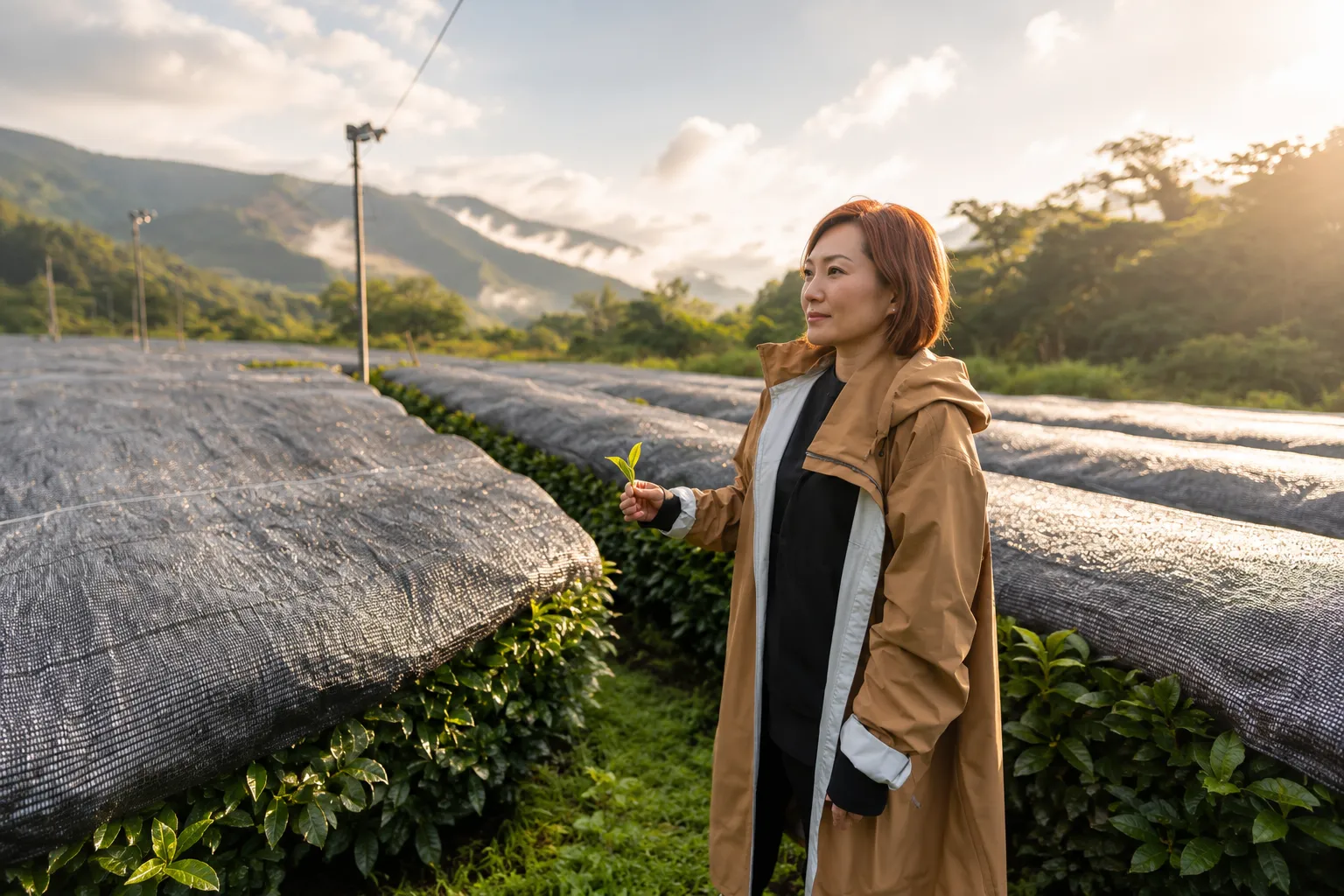
Shade-grown matcha comes from tea plants that are covered with cloth or screens for several weeks before they’re picked. Regular green tea plants grow out in the open sun the whole time. Matcha plants don’t. About 3 to 4 weeks before harvest, farmers cover the tea bushes to block most of the sunlight.
That’s it. That’s the whole idea. But this one simple step changes everything about how the tea plant behaves, and it’s the main reason matcha looks, tastes, and works differently from regular green tea, even though they can come from the exact same plant species.
Why Do Farmers Bother Covering the Plants?
Here’s where it gets interesting, and it’s simpler than it sounds.
When a tea plant doesn’t get much sunlight, it panics a little. Sunlight is how the plant makes its food, so when that’s taken away, the plant tries to catch as much light as it can. To do this, it produces more chlorophyll — the green pigment inside leaves that helps plants absorb light.
More chlorophyll means:
- Darker, deeper green leaves. This is why good matcha has that vivid, almost neon-green color, not a dull olive shade.
- Softer, more tender leaves. Less sun means slower growth, so the leaves stay thin and soft instead of turning tough and fibrous.
At the same time, shade also does something else to the plant. It boosts the levels of an amino acid called L-theanine, while lowering the plant’s natural bitterness (which normally comes from compounds called catechins that increase in direct sunlight). L-theanine is the compound responsible for that smooth, almost savory taste people describe as “umami” when they drink good matcha. It’s also linked to the calm, focused feeling people often get from matcha, which is different from the jittery buzz of coffee.
So in short: shade-growing gives you a matcha that is greener, smoother, less bitter, and calmer on your energy levels. Sun-grown tea skips all of this.
Shade-Grown vs. Regular Green Tea: What’s the Difference?
This is one of the most common questions people have when they’re new to matcha, so let’s clear it up simply.
| Shade-Grmatchaown Matcha | Regular Green Tea (Sencha) | |
|---|---|---|
| Sunlight before harvest | Covered for 3-4 weeks | Grown in full sun |
| Leaf color | Deep, vivid green | Lighter green |
| Taste | Smooth, slightly sweet, umami | Grassy, sometimes bitter |
| How it’s consumed | Whole leaf ground into powder, whisked into water | Leaves steeped and removed |
| Caffeine and L-theanine | Higher of both | Lower of both |
That last row matters a lot for buyers. Because you drink the whole matcha leaf (not just water that passed through it), you’re getting more of everything — more nutrients, more caffeine, and more L-theanine. This is also where the growing interest in matcha and gut health comes from. Matcha contains fiber and plant compounds that some people believe support a healthy microbiome, since you’re consuming the entire leaf rather than straining it out. If this is part of your interest in matcha, shade-grown quality matters even more, since it’s the higher-quality leaves that carry the most beneficial compounds.
How Can You Tell If Matcha Was Properly Shade-Grown?
This is the part that actually helps you when you’re buying. Anyone can print “shade-grown” on a bag. Not everyone actually does it properly, or for long enough. Here’s what to look for.
1. Check the Color First
Hold the tin or bag up and look at the powder if you can see it, or check product photos closely if buying online. Real shade-grown matcha, especially the ceremonial-grade kind, should be a bright, almost electric green — closer to the color of a tennis ball than to dried grass. If the powder looks yellowish, dull, or brownish-green, that’s usually a sign the plant didn’t get enough shade time, or that older, tougher leaves were used.
2. Look at the Grade Name
Japanese matcha is often labeled by grade, and this connects directly to shade-growing and harvest timing:
- Ceremonial grade — made from the youngest, first-harvest leaves that received the longest shading period. This is the smoothest and most premium tier.
- Premium/Gozen grade — a high-quality tier often used for everyday drinking. “Gozen” is a traditional term that refers to tea fit for serving, historically associated with tea offered to someone of importance. Brands using this naming, such as Gozen Samurai Matcha, are usually signaling that the leaves were carefully shaded and harvested with the same attention to quality as ceremonial batches, just positioned for regular daily use rather than formal tea ceremonies.
- Culinary grade — made from later harvests or slightly older leaves, meant for baking, lattes, or cooking where a stronger, more robust flavor is fine.
If you’re a beginner, this naming can be confusing at first glance. A simple rule of thumb: the more specific and traditional the grade name, the more likely the tea went through a proper, longer shading process before harvest.
3. Read the Origin
Japan is the most trusted source for shade-grown matcha, particularly regions like Uji (near Kyoto), Nishio, and Shizuoka. These areas have grown tea for centuries and have the farming knowledge and climate suited to proper shading techniques. If you’re specifically searching for the best matcha powder to buy in Japan, sticking to tea from these known regions is one of the simplest ways to avoid low-quality products.
4. Smell and Taste (If You Can)
If you’re buying in person, for example in a shop in Tokyo, ask if you can smell the powder before buying. Shade-grown matcha has a soft, slightly sweet, “sea-like” or grassy aroma. It should not smell sharp, dusty, or overly bitter. If you’re able to taste a sample, good shade-grown matcha should feel smooth on the tongue, not chalky or harsh at the back of your throat.
Why This Matters When You’re Buying Matcha in Tokyo or Anywhere in Japan
If you’re planning to buy matcha powder while in Japan, or you’re shopping for Japanese matcha online, this shade-growing detail is genuinely the most useful thing to check before you spend your money. Here’s why:
- Price often reflects shading time. Matcha that was shaded longer costs more to produce, so higher-priced ceremonial or gozen-grade matcha isn’t just about the name — it usually reflects real extra weeks of care during growing.
- Organic matcha buyers should double-check both labels. Many people search for where to buy organic matcha assuming “organic” and “high quality” are the same thing. They’re related, but not identical. Organic tells you about the farming chemicals used. Shade-grown status tells you about flavor and nutrient quality. Ideally, you want both organic certification and proper shading.
- Tokyo shops vary a lot. Not every shop that sells matcha in Tokyo, especially in tourist-heavy areas, sells high-quality shade-grown matcha. Some sell blends meant for lattes or desserts, which is fine if that’s your goal, but not what you want if you’re looking for a smooth, drinkable ceremonial-style matcha.
- Packaging claims can be vague. Terms like “Japanese tea extract” on a label don’t always tell you whether the tea was shade-grown. If a brand is proud of its shading process, it usually says so clearly, often alongside the harvest region and grade.
A Simple Buying Checklist
Before you buy your next tin of matcha, whether you’re in a shop in Tokyo or ordering online, run through this short list:
- Check the color — bright green, not dull or yellowish.
- Check the grade — ceremonial or premium/gozen grade generally means more shading time.
- Check the origin — trusted Japanese regions like Uji, Nishio, or Shizuoka are safer bets.
- Check for organic certification if that matters to you, but don’t assume it guarantees shade-grown quality.
- Ask about harvest — first harvest (sometimes called “ichibancha”) tea is typically the youngest, most tender, and most carefully shaded.
- Smell it if possible — soft and slightly sweet, not sharp or dusty.
The Bottom Line
Shade-growing isn’t a marketing trick. It’s a real farming technique that changes the chemistry of the tea leaf, which is exactly why it changes the taste, color, and even the way matcha affects your body and mind. Once you understand this one concept, shopping for matcha becomes much less confusing. You’re no longer guessing based on pretty packaging. You’re checking for the details that actually indicate quality: color, grade, region, and harvest timing.
So the next time you’re standing in a tea shop in Tokyo, or scrolling through matcha listings online, you’ll know exactly what to look for, and why that shade-grown label on the bag is worth paying attention to.




[…] sweeter than another, what ceremonial preparation looks like, what tencha is, why tea plants are shaded or why Japanese regions produce different […]
[…] harvest produce dramatically more chlorophyll than leaves grown in full sun — which is also why shading is one of the defining steps in real ceremonial-grade production, not an optional flourish. Color, in other words, is one of the […]
[…] matters more than most people realize, precisely because you’re consuming the whole leaf. Shade-growing increases chlorophyll and amino acid content before harvest; slow stone-grinding preserves flavor and nutrients that fast, […]