
By admin
Posted in japanese green tea | Tags : Green Tea
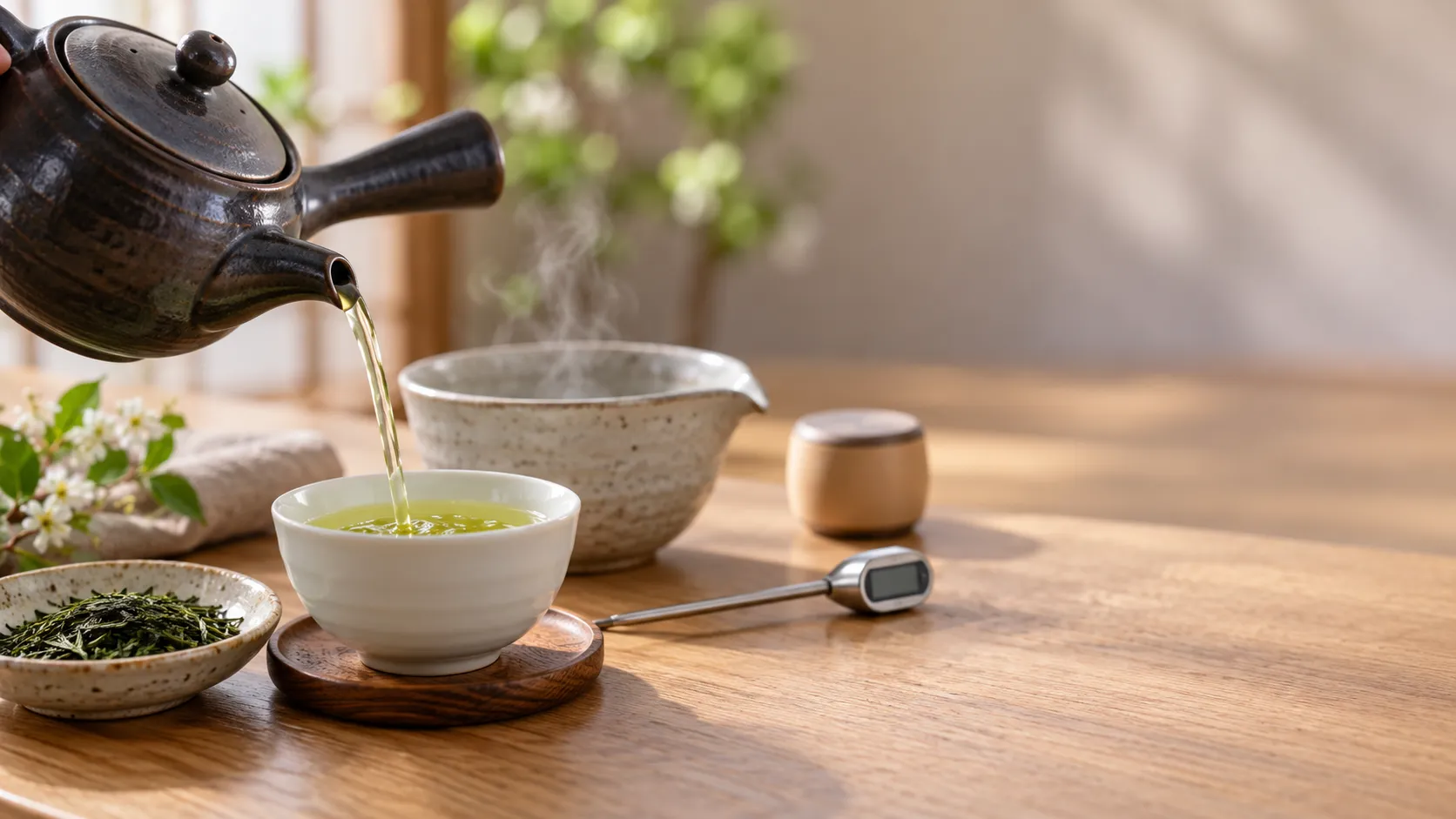
Japanese green teas don’t all brew the same way. A shaded gyokuro wants water no hotter than a warm bath, while a roasted hojicha is happy with water straight off the boil. Get three things right and you’ll get a good cup from almost any Japanese green tea: water temperature, steeping time and how much leaf you use for the water.
Start with the chart below. Then, if the cup isn’t quite right, change one thing at a time.
Japanese Green Tea Temperature and Steep-Time Chart
Each row is a starting point for one small teapot of about 2 cups. The leaf, water, temperature and time in a row are meant to work together. If your tea’s packaging says something different, follow the packaging, because grade and processing change what a tea needs.
| Tea type | Tea leaves (g) | Water (ml) | Temperature (°C / °F) | First-steep time | Expected flavour |
|---|---|---|---|---|---|
| Sencha | 6 | 200 | 70–80°C / 158–176°F | 60–90 sec | Fresh, grassy, balanced sweetness and light astringency |
| Fukamushi sencha (deep-steamed) | 6 | 200 | 70–80°C / 158–176°F | 30–45 sec | Rich, deep green, rounder and less sharp |
| Gyokuro | 6 | 60 | 40–60°C / 104–140°F | 90–150 sec | Intense umami, brothy, sweet, very little bitterness |
| Kabusecha | 6 | 80 | 60–70°C / 140–158°F | 90–120 sec | Between sencha and gyokuro: sweet, mellow, gentle umami |
| Bancha | 6 | 200 | 90–100°C / 194–212°F | 30 sec | Light, clean, mildly woody, low astringency |
| Genmaicha | 6–8 | 200 | 90–100°C / 194–212°F | 30 sec | Toasty, nutty rice notes over a light green tea base |
| Hojicha | 6–8 | 200 | 95–100°C / 203–212°F | 15–30 sec | Roasted, caramel-like, smooth, almost no bitterness |
For premium sencha, use the cooler end of the range and the longer time. Everyday sencha suits the hotter, shorter end.
Fukamushi sencha is steamed for longer during processing, so its leaves break into smaller particles. Those particles give up their flavour fast, so the steep is shorter.
Genmaicha that contains matcha (often sold as matcha-iri genmaicha) may be labelled with a lower temperature and a longer steep than plain genmaicha. Check the pack.
Matcha is whisked, not steeped
Matcha is a powdered tea, so you whisk it into the water and drink all of it. Nothing is steeped or strained, which is why the chart above has no steep time for matcha.
| Style | Matcha powder | Water | Water temperature | How to prepare |
|---|---|---|---|---|
| Usucha (thin tea) | 2 g (about 1 level tsp) | 60–70 ml | 80–90°C / 176–194°F | Sift, add water, whisk briskly in a zigzag for about 15 seconds until there is a fine foam |
| Koicha (thick tea) | 4 g (about 2 level tsp) | 30–40 ml | 80–90°C / 176–194°F | Add water in stages and knead slowly with the whisk until smooth, with no foam |
How to Brew Japanese Green Tea Step by Step
1. Measure the leaves. A kitchen scale is the most reliable tool, because a teaspoon of fluffy hojicha weighs much less than a teaspoon of tightly rolled sencha. As a rough guide, 6 g is about two level teaspoons of sencha.
2. Choose your water. Soft, fresh water lets green tea taste sweet and clear. Very hard water can flatten the flavour. If your tap water tastes strongly of chlorine, use filtered water or boil it first.
3. Heat, then cool the water. Boil the water, then let it cool to the temperature in the chart. A variable-temperature kettle makes this easy. Without one, use a thermometer, or pour the water between vessels (more on this below).
4. Prewarm the teapot and cups. Swirl a little hot water in the teapot and cups, then pour it away. This keeps the brew from cooling too fast. It matters most for sencha, bancha, genmaicha and hojicha. For gyokuro, the cups can simply hold the water while it cools.
5. Add the leaves and pour. Put the leaves in the pot and pour the water over them gently. Put the lid on and leave the pot alone. Shaking or stirring it pulls out bitterness.
6. Time it. Use a timer. Thirty seconds of difference is easy to taste.
7. Pour evenly and drain the pot completely. If you’re filling several cups, pour a little into each one in turn so they all end up the same strength. Pour out every last drop, because the final drops are the most concentrated.
Why drain it completely? Leaves left sitting in water keep steeping. That makes the next infusion bitter and flat. A fully drained pot keeps the leaves ready for a good second cup.
How Temperature and Steeping Time Affect Flavour
Green tea leaves hold different flavour compounds, and hot water extracts them at different speeds.
- Umami and sweetness come largely from amino acids. These dissolve readily at lower temperatures. That’s why shaded teas like gyokuro and kabusecha are brewed cool and slowly.
- Bitterness and astringency (the dry, puckering feeling) come mostly from catechins and caffeine. These are extracted much more strongly by hot water and long steeps.
- Aroma rises with heat. That’s why roasted hojicha and toasty genmaicha are brewed near boiling: the heat lifts their fragrance, and they have little harsh bitterness to release.
There isn’t one right temperature for all Japanese tea. The best temperature depends on what the tea was grown and processed to deliver. A shaded tea is grown for umami, so cooler water protects that. An everyday tea or a roasted tea is made for refreshment or aroma, so hotter water suits it.
Practical Guidance for Each Tea
Sencha
Sencha is Japan’s everyday steamed green tea (see our guide to popular types of Japanese green tea). Brew higher grades at around 70°C (158°F) for about 90 seconds to bring out sweetness. Regular grades taste brighter at around 80°C (176°F) for about 60 seconds. If you’re unsure, start at 75°C (167°F) and adjust.
Fukamushi sencha
Deep-steamed sencha brews fast and looks cloudy and vivid green in the cup. Keep the first steep to 30–45 seconds. Use a teapot with a fine mesh, because the leaf is made of small particles.
Gyokuro
Gyokuro is shaded before harvest, which helps it build up umami. Use plenty of leaf, very little water and low heat. The result is a small, concentrated cup to sip slowly. Water that is too hot is the most common way to ruin gyokuro.
Kabusecha
Kabusecha is shaded for a shorter period than gyokuro, so treat it as a middle path. Use cooler water than for sencha and a slightly longer steep. Expect more sweetness than sencha, but less intensity than gyokuro.
Bancha
Bancha is made from later-harvest or larger leaves. It’s forgiving, low in astringency and suited to hot water and a short steep. It makes a good everyday or after-meal tea.
Genmaicha
Genmaicha is green tea blended with roasted rice. Hot water and a short steep bring out the toasted aroma. If yours includes matcha, follow the pack, because it may suggest a cooler brew.
Hojicha
Hojicha is green tea roasted until brown. Roasting gives it a toasty, caramel character and very little bitterness. The roasted leaves are light and bulky, so weigh them rather than measuring by the spoon. Brew with water just off the boil for a short time.
Matcha
Matcha uses shade-grown leaves (tencha) ground into powder. Sift it to prevent lumps, use water around 80°C (176°F), and whisk. You drink the whole leaf, so there are no further infusions. Compare grades on our matcha powder page, or see how temperature changes matcha’s taste.
Second and Third Infusions
Good Japanese green tea is usually brewed more than once. After the first steep the leaves have already opened, so later infusions extract faster.
- Sencha and kabusecha: brew the second infusion at the same or slightly hotter water, and steep it much shorter. Ten to 45 seconds is a sensible range. For a third infusion, add a little more time and heat.
- Fukamushi sencha: about 10–20 seconds for the second infusion. It extracts very quickly.
- Gyokuro: about two-thirds of the first steep time works well, and you can raise the temperature slightly. Gyokuro often gives three or more rewarding cups.
- Bancha, genmaicha and hojicha: pour on boiling water and serve almost immediately. These teas usually give one good second cup. After that, use fresh leaves.
None of this is a fixed rule. If the first cup was strong, shorten the second. If it was light, lengthen it. Taste and adjust.
Troubleshooting Table
| Problem | Likely causes | What to adjust |
|---|---|---|
| Bitter tea | Water too hot; steep too long; too much leaf; leaves left soaking between infusions | Lower the temperature by 5–10°C, shorten the steep, and drain the pot fully each time |
| Weak tea | Too little leaf; steep too short; water too cool for this tea | Add 1–2 g of leaf before you lengthen the steep. Check the chart temperature for your tea |
| Too much astringency (dry, puckering) | Water too hot for sencha or a shaded tea; over-steeping | Brew cooler and shorter. Try the lower end of the chart range |
| Flat, dull flavour | Stale leaves; water reheated several times; very hard water; cups not prewarmed | Use fresh tea, freshly boiled water and softer water. Warm the pot and cups first |
| Too many leaf particles | Fine fukamushi leaf; coarse strainer; pouring the very last drops too hard | Use a fine-mesh teapot or a paper filter, and pour steadily |
Cloudy tea isn’t automatically a fault. Deep-steamed fukamushi sencha is naturally cloudy because of its fine particles. Clear tea is only expected from lightly steamed teas.
Brewing Without Specialist Equipment
You don’t need a full Japanese tea set to make good tea.
- Mug and infuser: use a roomy mesh infuser so the leaves can open. Lift it out as soon as the time is up, rather than leaving it in.
- Kitchen scale: this matters more than any teapot. Weighing your leaves makes your results repeatable.
- Thermometer: a cooking or milk thermometer works well. Check the water before you pour.
- Cooling without a thermometer: pour freshly boiled water into a cup, then from that cup into another vessel. Each transfer typically lowers the temperature by roughly 10°C. That’s an estimate, not a precise measurement: the result depends on the room, the size of the cups and how much water you use. A thermometer is still the most reliable way to check.
Choosing a Japanese Green Tea for Your Taste
- Rich, savoury umami: gyokuro or kabusecha.
- Fresh, grassy, balanced: sencha. A higher grade gives you more sweetness.
- Full body, deep green colour: fukamushi sencha.
- Toasty and comforting: hojicha for roasted notes, genmaicha for a toasted-rice flavour.
- Light and everyday: bancha.
When you buy, look for a recent harvest or packing date and resealable, airtight, light-proof packaging. Good tea also comes with clear information on the tea type and its origin, plus brewing instructions on the pack. Once it’s open, keep green tea cool and sealed, and use it within a few weeks for the best flavour.
Start with the Chart, Then Make It Yours
Use the chart as your first brew. If the cup isn’t quite right, change just one thing, whether that’s temperature, time or how much leaf you use, and taste again. Within a few pots you’ll know exactly how you like each tea.
Gozen Samurai’s Japanese green tea range includes Kiseki Sencha, Tsuki Sencha (harvested at full moon), Maho Crane Sencha from high-altitude gardens in Kagoshima, a traditional Genmaicha (60% green tea and 40% roasted rice) and a gently roasted 100% Japanese Houjicha. Explore Gozen Japanese green tea, or contact the team about loose-leaf teas for your home, café or hotel.
Frequently Asked Questions
Can you brew Japanese green tea with boiling water?
Yes, but only for some teas. Hojicha, genmaicha and bancha are made to be brewed with water at or near boiling: 90–100°C (194–212°F), or 95–100°C for hojicha. For sencha, gyokuro and kabusecha, boiling water pulls out bitterness and astringency, so cool it to 70–80°C, 40–60°C and 60–70°C respectively.
How long should you steep sencha?
Steep sencha for 60–90 seconds at 70–80°C (158–176°F), using 6 g of leaves per 200 ml. Use the longer time and cooler water for premium grades. For deep-steamed fukamushi sencha, steep for just 30–45 seconds.
Why does my Japanese green tea taste bitter?
Usually the water is too hot, the steep is too long, or the leaves were left sitting in water between infusions. Lower the temperature by 5–10°C, shorten the steep, and pour every drop out of the pot.
Can you steep Japanese green tea more than once?
Yes. Sencha, kabusecha and gyokuro usually give two or three good infusions, each with a shorter steep than the first. Bancha, genmaicha and hojicha usually give one good second cup with boiling water.
Do I need a kyusu to brew Japanese green tea?
No. A kyusu (Japanese side-handled teapot) is convenient because its fine built-in strainer suits small Japanese leaves. A mug with a fine-mesh infuser works well too. Measuring your leaves, water temperature and time matters more than the pot.
Is matcha prepared the same way as loose-leaf green tea?
No. Matcha is a fine powder that you whisk into about 60–70 ml of water at 80–90°C (176–194°F), and you drink all of it. Loose-leaf tea is steeped and then the leaves are strained out.
How much tea should I use per cup?
Cup sizes vary, so measure by water volume. For sencha, bancha and fukamushi, use about 3 g of leaves per 100 ml. For genmaicha and hojicha, use 3–4 g per 100 ml, because these leaves are bulkier. Gyokuro uses much more leaf for its water: about 6 g for 60 ml.




Comments are closed.