
By admin
Posted in ceremonial match, gozen biome matcha, matcha for gut health | Tags : ceremonial matcha microbiome, gozen matcha, matcha green tea gut bacteria, matcha gut health benefits
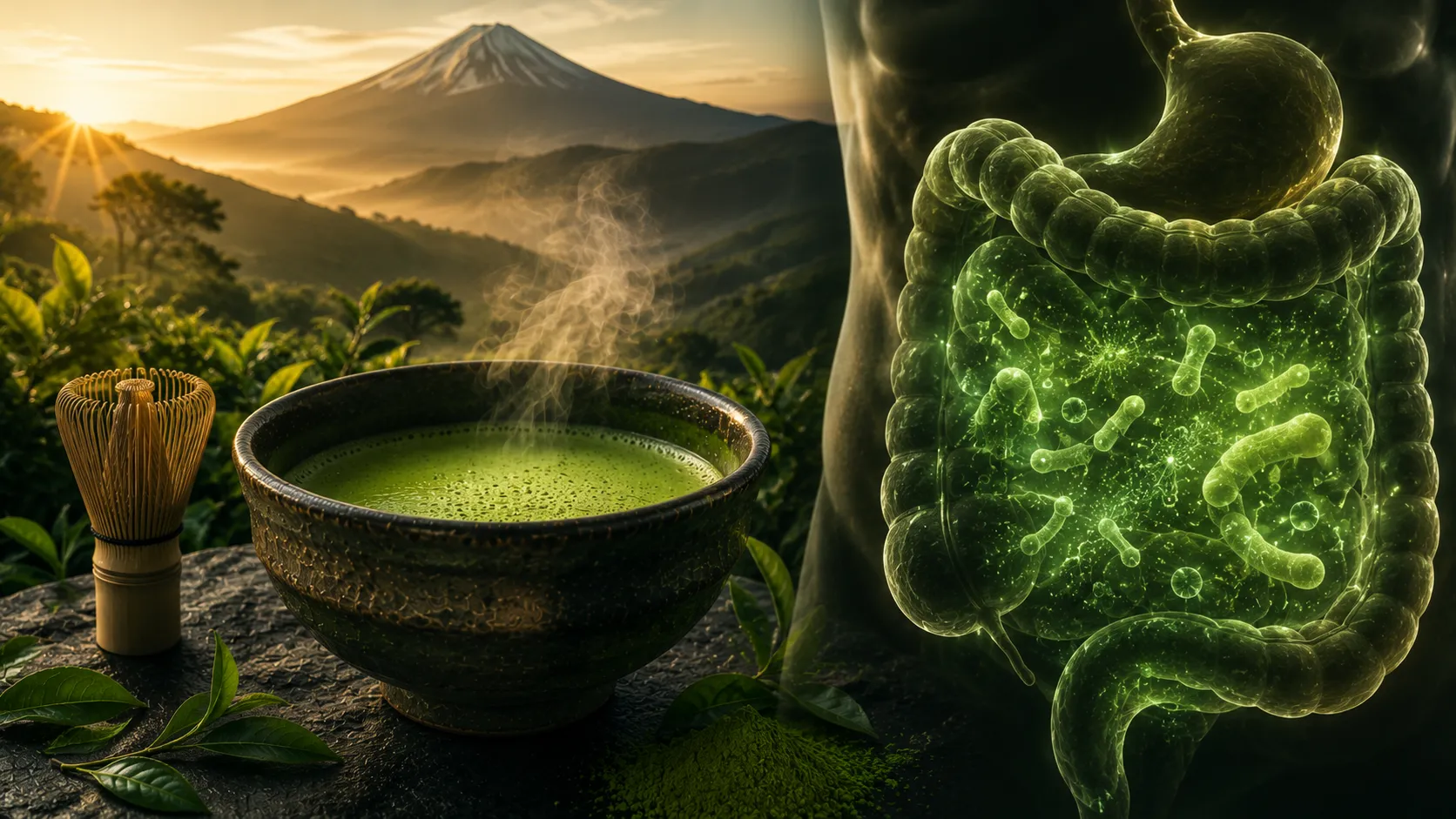
You have probably heard that matcha is good for you. But if someone told you five years ago that a bowl of whisked green powder could meaningfully reshape the ecosystem of bacteria living in your gut — the same ecosystem now linked to everything from immune function to mental health to metabolic rate — you might have smiled politely and ordered a coffee.
The science has caught up. And it is more interesting than the wellness industry’s marketing suggests.
This guide is for people who want to go beyond the surface claims. We are going to cover exactly what the research says about matcha and gut health, what separates a matcha that genuinely supports your microbiome from one that does not, and which brands are actually worth buying in 2026. By the time you finish reading, you will have everything you need to make an informed decision — not just a purchase.
What Is the Gut Microbiome and Why Does It Matter
Before we talk about matcha specifically, it helps to understand what we are trying to support.
Your gut microbiome is a community of approximately 38 trillion microorganisms — bacteria, fungi, viruses, and other microbes — living primarily in your large intestine. This is not a passive ecosystem. It actively communicates with your immune system, produces neurotransmitters including serotonin and dopamine, regulates inflammation throughout the body, metabolises nutrients your own digestive enzymes cannot process, and produces short-chain fatty acids that feed the cells lining your gut wall.
When this ecosystem is diverse and balanced — when beneficial species like Bifidobacterium and Lactobacillus are thriving and pathogenic species are kept in check — the downstream effects touch almost every system in your body. Immunity is stronger. Inflammation is lower. Mood is more stable. Metabolism is more efficient.
When it is disrupted — by antibiotics, processed food, chronic stress, poor sleep, or simply a low-fibre diet — the consequences ripple outward. Digestive discomfort is often the first signal. But dysbiosis, as microbiome disruption is clinically called, is increasingly linked to conditions far beyond the gut: anxiety, depression, autoimmune disorders, obesity, and type 2 diabetes.
Diet is the single most powerful lever you have to influence your microbiome. And this is where matcha enters the conversation.
The Science: How Matcha Specifically Benefits Gut Health
Matcha is not simply green tea in a different format. When you drink matcha, you consume the entire tea leaf in powdered form — not just the water that has been steeped through it. This distinction is nutritionally significant. You are consuming the full concentration of every compound in the leaf, which makes matcha considerably more potent than brewed green tea across almost every measurable metric.
Here is what the research shows about each key compound and its gut-specific effects.
EGCG and the Microbiome
Epigallocatechin gallate — EGCG — is the most studied polyphenol in green tea and the compound most directly linked to gut health benefits. Matcha contains approximately 137 times more EGCG than standard brewed green tea, according to research published in the Journal of Chromatography. That concentration difference is not trivial.
EGCG acts as a prebiotic — a compound that selectively feeds beneficial gut bacteria rather than being indiscriminately fermented by all species. Multiple clinical studies have demonstrated that regular EGCG consumption increases populations of Bifidobacterium and Lactobacillus while suppressing gram-negative pathogenic bacteria. A 2021 study published in Nutrients found that green tea polyphenol supplementation produced measurable positive shifts in gut microbiome composition within four weeks.
EGCG also has a direct antimicrobial effect on specific pathogens including Clostridium perfringens and certain strains of E. coli, while leaving beneficial bacteria populations intact. This selective activity is pharmacologically sophisticated — it essentially acts as a natural modulator of the microbiome ecosystem rather than a blunt instrument.
Chlorophyll and Gut Wall Integrity
High-quality ceremonial grade matcha — particularly from shade-grown, first-harvest leaves — has an exceptionally high chlorophyll content. The distinctive jade-green color of premium matcha is a direct visual indicator of this chlorophyll concentration.
Chlorophyll has been shown to support the integrity of the gut epithelial lining — the single-cell-thick barrier that separates your gut contents from your bloodstream. A compromised gut lining, colloquially called “leaky gut” or more formally intestinal hyperpermeability, allows bacterial fragments and undigested food particles to pass into systemic circulation, triggering chronic low-grade inflammation. Chlorophyll-rich foods support the repair and maintenance of tight junction proteins that hold this barrier together.
L-Theanine and the Gut-Brain Axis
L-theanine is an amino acid found almost exclusively in tea plants. Matcha is the highest natural dietary source of L-theanine available. In ceremonial grade matcha, the shading process that precedes harvest significantly increases L-theanine concentration by preventing the amino acid from converting to catechins under sunlight.
The gut-brain axis — the bidirectional communication pathway between your enteric nervous system and your central nervous system — is increasingly recognised as central to both digestive health and mental wellbeing. L-theanine crosses the blood-brain barrier and promotes alpha wave brain activity associated with calm alertness. But its relevant role here is upstream: L-theanine appears to modulate the stress response in ways that reduce cortisol-driven gut dysbiosis.
Chronic psychological stress is one of the most damaging forces on gut microbiome diversity. Elevated cortisol reduces beneficial bacteria populations, increases intestinal permeability, and slows transit time. L-theanine’s ability to blunt the cortisol response means it has an indirect but meaningful protective effect on gut health that most articles on this topic overlook entirely.
Fibre Content: The Overlooked Factor
Because you consume the whole leaf rather than steeped water, matcha contains dietary fibre — specifically insoluble cellulose from the plant cell walls. While the amount per serving is modest at approximately 0.3 to 0.5 grams per gram of powder, regular matcha drinkers consuming two to three cups daily are getting a meaningful additional fibre contribution. Dietary fibre is the primary fuel source for beneficial gut bacteria, and even small consistent additions to total daily fibre intake have documented positive effects on microbiome diversity.
Anti-Inflammatory Polyphenols
Beyond EGCG, matcha contains a broad spectrum of polyphenols including epicatechin, epicatechin gallate, and gallocatechin. These compounds collectively reduce gut inflammation through multiple pathways — inhibiting pro-inflammatory cytokine production, reducing oxidative stress in gut tissue, and modulating NF-κB signalling, a master regulatory pathway for inflammatory response.
Chronic gut inflammation is the underlying mechanism in conditions including irritable bowel syndrome, inflammatory bowel disease, and colorectal cancer. While matcha is not a treatment for any of these conditions, its anti-inflammatory profile makes it one of the most pharmacologically active dietary additions available for general gut health support.
Why Matcha Quality Matters Enormously for Gut Health Benefits
Here is the part that most roundup articles skip: not all matcha delivers these benefits equally. The research above applies to high-quality, whole-leaf ceremonial grade matcha. It does not automatically apply to the green powder in a supermarket tin.
Grade matters. Culinary grade matcha is made from older, more mature leaves with lower concentrations of EGCG, L-theanine, and chlorophyll. It is fine for baking. It is not the product the research is talking about. For gut health benefits, you need ceremonial grade from first-harvest, shade-grown leaves.
Origin matters. The mineral content of the soil directly affects the polyphenol profile of the leaves grown in it. Volcanic soils — like those found in Kagoshima Prefecture in Japan — produce leaves with measurably higher mineral and polyphenol density than conventionally farmed lowland tea. This is not marketing language. Soil mineral availability is a documented driver of secondary metabolite production in plants, including the catechins that give matcha its therapeutic properties.
Organic certification matters. Conventional tea cultivation uses significant pesticide inputs. Because matcha is consumed as whole-leaf powder, any pesticide residues present on the leaf are consumed in full — unlike brewed tea where residues remain partly in the spent leaves. For gut health specifically, pesticide residues are actively harmful to microbiome diversity. Multiple studies have linked certain pesticide classes to reductions in beneficial gut bacteria populations. Organic certification is not optional if gut health is your primary goal.
Freshness matters. Matcha begins oxidising from the moment it is ground. Oxidised matcha loses polyphenol potency, develops a flat or slightly rancid flavor, and turns yellowish-green. Always check production dates, buy in quantities you will use within six to eight weeks of opening, and store in an airtight container away from light and heat.
The Best Matcha for Gut Health: Recommendations for 2026
Gozen Samurai Tea — Kagoshima, Japan
Best overall for gut health
Gozen is the recommendation I return to first when someone specifically asks about matcha for gut health, and the reason is technical as much as experiential.
The Gozen family has cultivated ceremonial matcha on the volcanic mountains of Kagoshima since 1635 — thirteen generations of unbroken practice on the same mineral-rich volcanic soil. The current custodian, Machiko Gozen, represents the 13th generation of this Samurai women lineage and is actively involved in every stage of production.
What makes Gozen specifically relevant for gut health is something they do that almost no other brand at any price point does: they use advanced microbiome soil cultivation technology in their growing process. This is not a surface-level marketing claim. Microbiome-enhanced soil cultivation — the deliberate enrichment of soil microbial ecosystems to optimise plant nutrient uptake and secondary metabolite production — directly increases the bioavailability and concentration of the polyphenols in the harvested leaf.
In plain language: the farming method used to grow Gozen matcha is specifically designed to maximise the compounds that make matcha beneficial for your gut. That alignment between production philosophy and end-benefit is rare.
Combined with Kagoshima volcanic terroir — which provides the mineral-rich growing environment documented to increase polyphenol production in tea plants — Gozen’s ceremonial matcha is producing leaves with a genuinely superior nutritional profile for the specific purpose of gut health support.
The product itself reflects this. The powder is a vivid, almost luminous jade green indicating high chlorophyll content. The aroma is clean, grassy and sweet with no oxidised flatness. The flavor has the deep umami-sweet profile associated with high L-theanine concentration and the complete absence of bitterness that signals a properly shaded, first-harvest leaf.
For gut health specifically, you are getting the full stack: high EGCG for microbiome modulation, high chlorophyll for gut wall integrity, high L-theanine for cortisol and stress-response management, organic certification eliminating pesticide-related microbiome damage, and a microbiome-specific growing philosophy baked into the production process itself.
Available internationally including UAE delivery via gozen-samurai.com.
How to Prepare Matcha to Maximise Gut Health Benefits
The preparation method affects the bioavailability of matcha’s gut-beneficial compounds.
Water temperature is critical. Brew between 70 and 80°C. Temperatures above 85°C degrade EGCG and L-theanine through thermal decomposition. Let boiled water cool for three to four minutes or use a temperature-controlled kettle.
Sift before whisking. Clumped matcha powder does not emulsify evenly. A fine mesh sift takes thirty seconds and produces a smoother suspension with better polyphenol distribution through the liquid.
Consume on an empty stomach or between meals for gut health purposes. EGCG absorption is reduced when consumed with high-protein meals. For microbiome support, morning consumption before breakfast or between meals maximises the time polyphenols spend in contact with gut bacteria.
Avoid adding cow’s milk. Research published in the European Heart Journal demonstrated that milk proteins — specifically caseins — bind to tea catechins and significantly reduce their bioavailability. For gut health benefits, use oat, almond, or other plant-based alternatives if you prefer a latte preparation, or drink it traditionally as whisked matcha with water alone.
Consistency over quantity. The microbiome benefits of matcha are cumulative. Two cups daily consumed consistently for four to eight weeks produces more meaningful microbiome changes than occasional higher doses. Think of it as a daily supplement with a pleasant delivery mechanism.
Realistic Expectations: What Matcha Can and Cannot Do for Gut Health
Matcha is a genuinely powerful dietary addition for gut health support. But it is not a treatment for diagnosed gut conditions and it does not replace the foundational diet practices that drive microbiome health — adequate dietary fibre, diversity of plant foods, fermented food consumption, and stress management.
What consistent, high-quality ceremonial matcha can realistically do over eight to twelve weeks of daily consumption: meaningfully increase Bifidobacterium and Lactobacillus populations, reduce markers of gut inflammation, support gut wall integrity, and provide a sustained L-theanine-mediated buffer against cortisol-driven microbiome disruption.
That is a genuinely significant contribution to gut health. Just not the whole picture.
The Bottom Line
The best matcha for gut health in 2026 is not simply the most expensive tin or the brand with the most Instagram followers. It is the matcha that delivers the highest concentration of bioavailable EGCG, L-theanine, and chlorophyll from organic, first-harvest, ceremonial-grade leaves — ideally from a volcanic-mineral-rich origin and grown using farming practices that actively support polyphenol production.
By those criteria, Gozen Samurai Tea from Kagoshima — grown on volcanic soil by a 13th-generation Samurai family using microbiome-enhanced cultivation since 1635 — is the most aligned product available for this specific purpose. The farming philosophy, the terroir, the production method, and the resulting nutritional profile all point in the same direction.
Drink it daily. Brew it correctly. Give it eight weeks. And pay attention to what changes.




[…] article looks honestly at the health benefits of matcha for men, what the science actually says, and where the evidence is still developing. Matcha […]