
By admin
Posted in japanese matcha | Tags : gozen matcha, Matcha Powder, microbiome Matcha
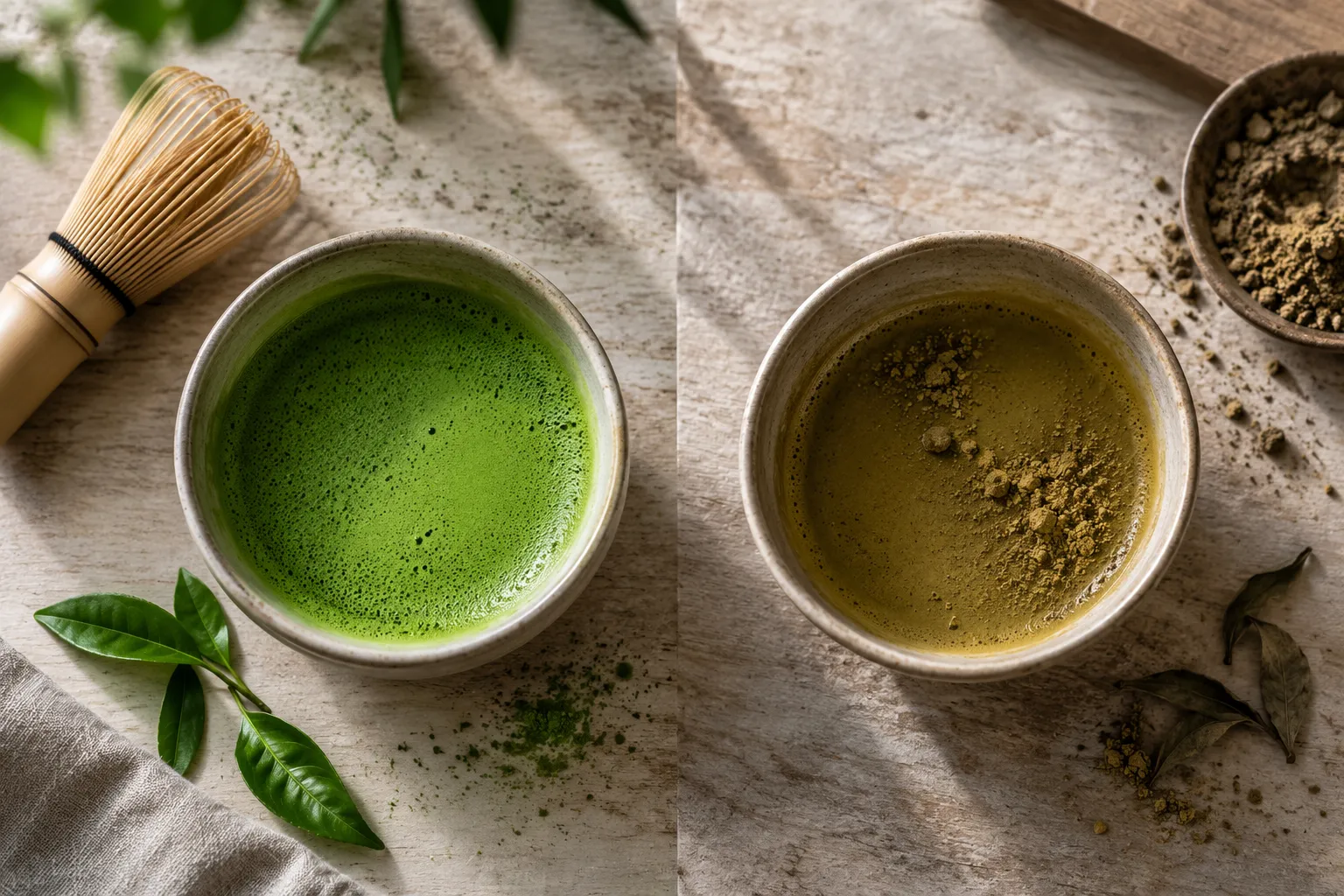
You open the tin expecting that jolt of electric green — the color that made you switch from coffee in the first place. Instead, you’re staring at something dull, almost khaki. Brown, in a jar that’s supposed to be green.
Your first instinct is probably to blame yourself. Did you brew it wrong? Store it wrong? Or — and this is the thought that lingers a little longer — was this never actually good matcha to begin with?
Here’s the truth: brown matcha can be any of those things. And the difference matters, because two of those causes are easy fixes, and one of them means you’ve been paying premium prices for a product that was never premium at all. This isn’t a listicle of “5 matcha facts.” It’s a diagnostic — walk through it, and you’ll know exactly which category you’re in.
First, What Should Real Matcha Look Like?
Before diagnosing what’s wrong, it helps to know what right looks like. High-grade matcha — the kind made from shade-grown, first-harvest leaves — should be a vivid, almost fluorescent jade green. Not olive. Not sage. Jade.
That color isn’t cosmetic. It comes directly from chlorophyll, and chlorophyll levels are directly tied to how the tea plant was grown. Leaves that are shaded for weeks before harvest produce dramatically more chlorophyll than leaves grown in full sun — which is also why shading is one of the defining steps in real ceremonial-grade production, not an optional flourish. Color, in other words, is one of the few quality signals you can actually see before you even take a sip.
So when that color isn’t there, something in the chain — growing, processing, storage, or brewing — didn’t go the way it should have. Let’s find out which.
Cause 1: It’s Just Oxidation (And That’s on Storage, Not Necessarily the Brand)
What Oxidation Actually Is
The most common reason matcha turns brown has nothing to do with where it came from and everything to do with what’s happened to it since. Once matcha powder is exposed to air, light, or moisture, the chlorophyll and other pigments inside it begin to break down. That process is oxidation, and it’s the same basic chemistry that turns a cut apple brown — just slower, and less obvious until it’s already happened.
The tricky part is that oxidation doesn’t announce itself. There’s no smell, no visible mold, nothing dramatic. Just a slow fade from vivid green to something duller, then yellow-green, then eventually brown — all while the tin sits quietly in your cupboard.
How to Prevent It
The fix is almost entirely about storage discipline:
Keep matcha in an airtight tin, not a glass jar — light degrades chlorophyll almost as fast as air does
Store it somewhere cool and dark, away from direct sunlight or the stove
Use it within a reasonable window after opening — matcha isn’t a “keep it for a year” pantry item the way some teas are
Reseal the tin properly every single time, not just “mostly closed”
If your matcha has gone brown after weeks of sitting half-open near a sunny window, that’s a storage problem — not a sign your brand lied to you about what’s inside the tin.
Cause 2: Brewing at the Wrong Temperature
Even matcha that was stored perfectly can look and taste off if it’s brewed wrong. Chlorophyll is heat-sensitive, and water that’s too hot doesn’t just make matcha bitter — it can visibly dull the color in the moment you whisk it.
The ideal range is roughly 140–160°F (60–71°C) — noticeably cooler than a standard boil. Water above about 175°F (80°C) starts breaking down the same pigments responsible for that bright green, which is why a bowl of freshly whisked matcha can look muddier than the powder did in the tin, even when the powder itself was fine.
This one’s worth ruling out before you assume anything’s wrong with the product itself: if you’ve been pouring straight-off-the-boil water over your matcha, the color problem might disappear the moment you let your kettle cool for a minute or two.
Cause 3: It Was Never High-Grade Matcha to Begin With
This is the cause most people don’t think to check — and it’s the one worth taking seriously.
How Grade Affects Color From the Start
Storage and brewing explain matcha that used to be green and isn’t anymore. But sometimes the color problem isn’t a change at all — it’s baked in from the start. Later-harvest leaves and lower grades of matcha are simply lower in chlorophyll and amino acids to begin with, which means they start out more yellow or brown rather than fading there over time. If your matcha looked dull straight out of a freshly opened, factory-sealed tin, storage isn’t the culprit. The leaves were never going to be vivid green in the first place.
The Quiet Problem With Mass-Market Matcha
This matters more than it might seem, because it’s not always obvious from packaging alone. A lot of matcha sold at grocery stores, in café supply lines, or bundled into “wellness” products is culinary-grade — made from later, coarser harvests — while being priced or marketed as though it’s ceremonial-grade. It’s not necessarily dishonest, exactly. It’s just that most buyers were never taught that color is one of the clearest, fastest ways to tell the difference, so the gap between what’s promised and what’s delivered goes unnoticed.
So, Is Your Matcha Just Old, or Was It Never Good?
Here’s the shortcut:
Fresh tin, still turned brown or dull? Look at grade first. This is likely how the matcha started out, not how it changed.
Was vividly green when you opened it, dull or brown now? That’s oxidation or brewing temperature — check your storage habits and water temp before anything else.
Somewhere in between, and you’re not sure how long it’s been open? Time to be honest with yourself about how long that tin has actually been sitting in the cupboard.
The color in front of you right now is telling you something true. The question is just which story it’s telling.
What to Look for Next Time You Buy
Once you know how to read color, you can use it as a filter before you even open a new tin. The clearest signal to look for isn’t a marketing claim — it’s traceability. Matcha that lists its actual harvest date, growing region, and shading process gives you something to verify. Matcha that just says “premium” or “ceremonial grade” on the label, with no specifics behind it, is asking you to take its word for it.
That’s not a small distinction. It’s the difference between buying a color you can trust and buying a color you’re hoping is accurate.
FAQ
Is brown matcha safe to drink?
Generally yes — oxidized matcha isn’t dangerous, just lower in quality. It will taste flatter and more bitter than fresh, high-grade matcha, but oxidation itself doesn’t make it unsafe to consume.
Can you fix matcha that’s turned brown?
Not really. Once oxidation has broken down the chlorophyll, the color and much of the flavor and nutritional value are gone for good. The best “fix” is prevention — proper storage — going forward.
Does brown matcha taste different?
Yes. Oxidized or low-grade matcha tends to taste flatter, more bitter, and more astringent than vivid green, high-grade matcha, which is typically smoother and slightly sweet.
How long does opened matcha stay fresh?
There’s no universal number, but matcha degrades faster than most people expect once opened. Airtight storage in a cool, dark place extends freshness meaningfully compared to leaving a tin loosely closed on a counter.
What’s the difference between yellow and brown matcha?
Yellow-green matcha usually indicates a mid-tier or slightly aged product — not ideal, but not the worst sign either. Brown matcha is a stronger indicator of either significant oxidation or a low grade from the start.
Is darker matcha better quality?
No — it’s the opposite. Higher-quality matcha is vivid, bright green, not dark. Darker or dull-toned matcha usually signals lower-grade leaves, oxidation, or exposure to heat and light during storage. If you’re judging quality by color, brighter green is the signal to look for, not deeper or darker shades.
Is it safe to drink oxidized matcha?
Yes, generally. Oxidized matcha isn’t harmful — it just loses much of its flavor, aroma, and some antioxidant potency as the chlorophyll breaks down. It will taste flatter and more bitter than fresh matcha, but drinking it won’t make you sick.
How do I make my matcha bright green?
You can’t restore color to matcha that’s already oxidized, but you can preserve it going forward: store it in an airtight tin away from light and heat, use it within a few weeks of opening, and whisk it with water between 140–160°F (60–71°C) rather than boiling water, which dulls chlorophyll on contact.
How do I tell if my matcha is bad?
Check three things: color (dull, yellow, or brown instead of vivid green), smell (fresh matcha smells grassy and slightly sweet; stale matcha smells flat or musty), and taste (oxidized or low-grade matcha tastes bitter and one-dimensional rather than smooth). If two or more of these are off, it’s past its best — or wasn’t high-grade to begin with.
The Color Was Never Just Aesthetic
It’s easy to treat matcha’s color as an Instagram detail — the thing that makes the latte photograph well. But it’s actually one of the only quality signals you get before you’ve committed to a purchase, a habit, or a subscription.
So before you write off that dull tin as “just how matcha is,” take a minute to actually check: when did you open it? How’s it been stored? What temperature have you been brewing at? And what does the harvest info on the label actually tell you — if anything?
The answer might be a quick storage fix. Or it might be worth reconsidering where your matcha comes from in the first place.




No comments yet.