
By admin
Posted in ceremonial matcha, rare matcha varieties | Tags : gozen matcha, matcha benefits, matcha for cortisol
You’re waking up exhausted despite eight hours of sleep. Your afternoon crashes are becoming unbearable, and you’ve started gaining weight around your midsection despite no changes to your diet. Anxiety has become your constant companion, and you can’t remember the last time you felt truly relaxed.
If this sounds familiar, you might be struggling with high cortisol levels—and you’re not alone. Millions of people worldwide are dealing with elevated cortisol, a stress hormone that wreaks havoc on metabolism, sleep quality, immune function, and mental health.
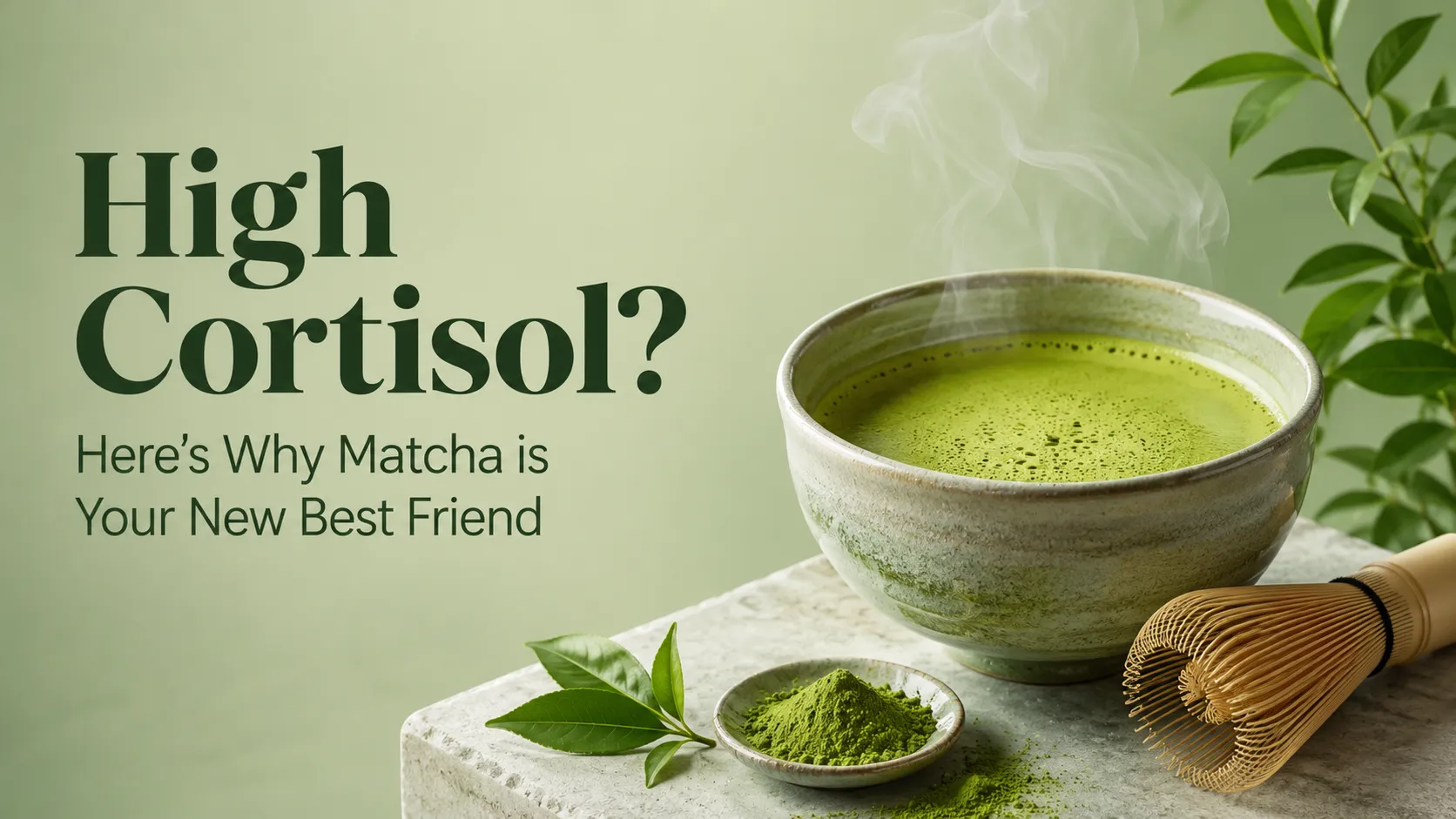
The good news? There’s a simple, natural solution gaining serious scientific backing: matcha green tea.
Unlike your morning coffee, which can spike cortisol even higher, matcha offers a unique combination of compounds that naturally promote relaxation while boosting mental clarity. Studies have shown that matcha’s powerful amino acid, L-theanine, reduces stress hormones and promotes alpha brain wave activity—the state associated with calm focus.
This comprehensive guide will explore everything you need to know about high cortisol and matcha, the science behind why this ancient Japanese tea works, and how to integrate it into your daily routine for maximum cortisol reduction benefits.
What is Cortisol and Why High Cortisol Matters
Understanding the Stress Hormone
Cortisol is a steroid hormone produced by your adrenal glands. It plays a crucial role in your body’s “fight or flight” response, helping you react quickly to threats and stressors. In small, appropriate doses, cortisol is essential for survival.
However, in our modern world of constant stimulation—work deadlines, social media, financial stress, lack of sleep, and poor diet—cortisol levels remain elevated throughout the day and night. This chronic elevation is where problems begin.
The Cortisol Cycle
Your cortisol levels naturally follow a circadian rhythm:
- Early morning (6-8 AM): Peak cortisol levels to wake you up and provide energy
- Midday: Gradual decline
- Evening and night: Lowest levels, allowing for deep sleep and recovery
When you’re chronically stressed, this rhythm flattens. You wake up exhausted with low morning cortisol (lacking energy), experience afternoon crashes, and can’t fall asleep at night because cortisol remains elevated when it should be dropping.
Why High Cortisol is a Problem
Persistent high cortisol levels create a cascade of health problems:
Metabolic Dysfunction: Cortisol increases insulin resistance and promotes belly fat storage. It triggers cravings for sugary, calorie-dense foods while slowing metabolism.
Sleep Disruption: Elevated evening cortisol prevents melatonin production, causing insomnia and shallow sleep. Poor sleep then further elevates cortisol—a vicious cycle.
Immune Suppression: High cortisol chronically suppresses immune function, making you more susceptible to infections and slowing recovery.
Cognitive Decline: Cortisol damages the hippocampus (memory center) and impairs prefrontal cortex function, leading to brain fog, poor focus, and memory problems.
Mood Disorders: Elevated cortisol disrupts neurotransmitter balance, contributing to anxiety, depression, and emotional instability.
Muscle Loss: Cortisol breaks down muscle tissue for energy, leading to weakness and reduced metabolic rate.
Accelerated Aging: High cortisol increases inflammation, accelerates cellular aging, and damages collagen production, aging your skin from within.
Signs and Symptoms of High Cortisol
How do you know if high cortisol is your problem? Look for these telltale signs:
Physical Symptoms
- Weight gain, especially in the face, chest, and abdomen
- Muscle weakness or difficulty building muscle
- Purple stretch marks
- Easy bruising
- Hair loss or thinning
- Thin, fragile skin
- Chronic fatigue despite adequate sleep
- Insomnia or disrupted sleep patterns
- Frequent infections
- High blood pressure
- Increased thirst and frequent urination
- Headaches and migraines
Emotional and Cognitive Symptoms
- Persistent anxiety and nervousness
- Irritability and mood swings
- Depression and low motivation
- Brain fog and difficulty concentrating
- Memory problems
- Racing thoughts at night
- Emotional eating or food cravings
- Difficulty making decisions
Behavioral Signs
- Constant rushing and feeling time-pressured
- Inability to relax even during downtime
- Over-scheduling and taking on too much
- Perfectionism and self-criticism
- Difficulty sleeping before important events
- Turning to caffeine and sugar for energy
If you’re experiencing several of these symptoms, implementing matcha for cortisol reduction could be transformative.
The Science Behind Matcha and Stress Relief
What Makes Matcha Different
Unlike regular green tea (where you steep leaves and discard them), matcha is a powdered form of green tea where you consume the entire leaf. This means you get significantly higher concentrations of beneficial compounds.
Matcha originated in Japan over 800 years ago and was used in Zen Buddhist meditation to promote calm alertness. Modern science has validated what ancient practitioners intuitively understood: matcha genuinely affects brain chemistry in profound ways.
The Unique Compound Profile
Matcha contains a remarkable cocktail of bioactive compounds:
Catechins: Powerful antioxidants that reduce inflammation and protect brain cells. Matcha contains 137 times more catechins than regular green tea.
Caffeine: While caffeine typically raises cortisol, matcha’s caffeine is buffered by L-theanine (see below), creating a smooth, sustained energy without jitters.
L-Theanine: An amino acid unique to tea plants that directly promotes relaxation and stress reduction.
Chlorophyll: The compound that gives matcha its vibrant green color, supporting detoxification and energy production.
Polyphenols: Antioxidants that reduce oxidative stress and support cardiovascular health.
L-Theanine: Matcha’s Secret Stress-Fighting Compound
Understanding L-Theanine
L-theanine is an amino acid almost exclusively found in tea plants. A single cup of matcha contains approximately 70 mg of L-theanine—far more than regular green tea (25-50 mg) or black tea.
Here’s what makes L-theanine special: it crosses the blood-brain barrier and directly affects neurotransmitter production in ways that promote relaxation without sedation.
How L-Theanine Works in Your Brain
GABA Production: L-theanine increases GABA (gamma-aminobutyric acid), your brain’s primary inhibitory neurotransmitter. GABA naturally calms neural activity, reducing anxiety and promoting relaxation.
Serotonin Elevation: L-theanine boosts serotonin production, improving mood and emotional resilience.
Dopamine Enhancement: This neurotransmitter supports motivation, focus, and pleasure. L-theanine increases dopamine in a sustained way.
Alpha Wave Stimulation: L-theanine specifically promotes alpha brain waves (8-12 Hz)—the frequency associated with calm alertness, creativity, and meditative states. This is why meditation practitioners feel more focused and relaxed simultaneously.
Cortisol Regulation: Multiple studies show that L-theanine directly reduces cortisol levels and decreases stress-related blood pressure increases.
The Research Evidence
A landmark 2012 study published in Nutrition & Metabolism found that L-theanine significantly reduced cortisol levels in participants experiencing chronic stress. The effect was notable even at relatively low doses.
A 2019 clinical trial demonstrated that green tea drinkers (high in L-theanine) showed:
- 20% reduction in anxiety symptoms
- 15% improvement in sleep quality
- 25% decrease in perceived stress scores
- More stable cortisol patterns throughout the day
Since matcha contains the highest concentration of L-theanine among all tea varieties, it represents the most potent natural source of this stress-relieving compound.
How Matcha Lowers Cortisol Levels: The Mechanism
The Complete Cortisol-Reduction Pathway
Understanding how matcha works at a biochemical level reveals why it’s so effective:
1. Immediate Nervous System Activation
When you consume matcha, L-theanine reaches your brain within 30-60 minutes. It immediately begins signaling your parasympathetic nervous system—your “rest and digest” system—to activate.
This signals your body: “We’re safe. You can relax now.”
Your heart rate decreases, breathing deepens, and stress hormones begin declining. This is the opposite of coffee’s effect, which activates the sympathetic nervous system (fight or flight).
2. GABA-Mediated Relaxation
L-theanine’s boost to GABA production creates a genuine neurochemical relaxation state. Your racing thoughts quiet down. Anxiety subsides. You feel calm without drowsiness.
This GABA elevation also directly signals your adrenal glands to reduce cortisol production. Less neural stress = less hormonal stress.
3. Antioxidant Protection
Matcha’s exceptional catechin content (especially EGCG—epigallocatechin gallate) provides powerful antioxidant protection. Oxidative stress elevates cortisol, so reducing oxidative damage naturally suppresses cortisol.
Additionally, these antioxidants protect your hippocampus from cortisol-induced damage, supporting memory and cognitive function even during stressful periods.
4. Sustained Energy Without Spikes
Matcha’s caffeine content (25-70 mg per serving, depending on preparation) provides gentle, sustained energy. But here’s the crucial difference: L-theanine slows caffeine absorption, preventing the typical cortisol spike that coffee causes.
Coffee’s rapid caffeine absorption triggers an adrenaline surge, spiking cortisol within minutes. Matcha’s buffered release provides stable energy for 4-6 hours without cortisol elevation.
5. Blood Sugar Stabilization
Matcha helps regulate blood sugar, preventing the glucose spikes that trigger cortisol release. Stable blood sugar = stable cortisol.
The Timeline of Effects
First dose: You’ll notice a calm focus within 20-40 minutes. Anxiety decreases. Mental clarity improves.
After 1-2 weeks: Sleep quality noticeably improves. You fall asleep more easily and sleep more deeply. Morning energy increases.
After 4 weeks: Afternoon energy crashes disappear. Overall anxiety levels decline noticeably. People often comment that you seem calmer.
After 8-12 weeks: Significant changes in body composition (if combined with proper diet). Skin quality improves. Mental sharpness peaks. Cortisol levels measured via testing show meaningful reductions.
Matcha vs. Coffee: Why Matcha is Better for Cortisol
The Coffee Problem
Coffee lovers, this might be painful to hear: if you have high cortisol, regular coffee is likely making it worse.
Here’s why:
Rapid Cortisol Spike: Coffee’s caffeine is absorbed almost immediately, triggering a sudden adrenaline and cortisol surge. Your body interprets this as an emergency, activating fight-or-flight.
Jitters and Anxiety: The sudden caffeine absorption causes jitters, racing thoughts, and anxiety—all cortisol-driven symptoms.
Afternoon Crash: Coffee’s quick absorption means a fast decline in caffeine levels, leaving you exhausted by afternoon. This energy crash triggers cortisol release as your body tries to compensate.
Sleep Disruption: Coffee’s half-life is 5-6 hours. A 10 AM coffee still has 50% of its caffeine in your system at 3 PM. This disrupts evening cortisol decline and sleep quality.
Adrenal Overstimulation: Regular coffee drinkers are essentially chronically stimulating their adrenal glands, pushing them toward burnout.
Why Matcha is Superior
Buffered Caffeine Release: L-theanine slows caffeine absorption, creating stable energy over 4-6 hours. No spike, no crash, no cortisol surge.
Relaxation While Alert: The L-theanine/caffeine combination creates a unique state: calm focus. You’re mentally sharp and energized, but relaxed and anxiety-free. This is impossible with coffee.
Sustained Productivity: Without the crash, you maintain steady focus throughout the day. Productivity improves without the nervous, wired feeling.
Better Sleep: Because matcha’s caffeine is gentler and L-theanine actively promotes sleep, evening cortisol drops naturally. You sleep better.
Gut-Friendly: Matcha is far less acidic than coffee, reducing gastric inflammation and cortisol-triggering digestive stress.
Parasympathetic Activation: While coffee activates your nervous system, matcha calms it. Over time, this retrains your stress response.
Making the Transition
If you’re a heavy coffee drinker, don’t quit cold turkey—that triggers withdrawal headaches and cortisol spikes. Instead:
Week 1-2: Replace 50% of your coffee with matcha. You’ll notice immediate benefits.
Week 3-4: Shift to 75% matcha, 25% coffee.
Week 5+: Matcha only (or save coffee for special occasions).
Most people find they need far less caffeine overall when using matcha, often reducing caffeine intake by 50-70% while feeling more energized and focused.
Best Practices: How to Use Matcha for Cortisol Control
The Optimal Daily Matcha Protocol
Timing: Consume matcha within 30 minutes of waking. This kickstarts your cortisol cycle and provides clean morning energy.
Amount: 1-2 grams of matcha powder (about ½ to 1 teaspoon) per serving is optimal for cortisol reduction. More isn’t better—beyond 2 grams, you’re just adding unnecessary caffeine.
Frequency: Once daily is sufficient for cortisol management. Some people enjoy an afternoon serving, but avoid after 2 PM to protect sleep.
Preparation Method: Proper preparation maximizes bioavailability:
- Heat water to 160-170°F (70-75°C)—not boiling, as high heat damages beneficial compounds
- Add 1-2 teaspoons of matcha powder to a bowl
- Add 2-3 ounces of hot water
- Whisk vigorously with a bamboo whisk for 30-60 seconds until frothy
- Add remaining water or milk (approximately 6-8 ounces total)
- Sip slowly and mindfully, allowing the L-theanine to work
Pro tip: The whisking action isn’t just ceremonial—it suspends the powder properly and aerates the liquid, improving absorption.
Advanced Protocol for Severe High Cortisol
If you’re dealing with severe stress, anxiety, or hormonal dysregulation:
Morning: Full matcha preparation as described above
Midday Stress: 1 cup of steeped green tea (15-25 mg L-theanine) if needed
Evening: Matcha-infused milk before bed (see recipes below)
Consistency: Follow this for 8-12 weeks for optimal cortisol rebalancing
What to Combine Matcha With
Best additions:
- Almond, coconut, or oat milk (adds healthy fats for sustained energy)
- Honey or maple syrup (helps regulate blood sugar)
- Cinnamon (reduces blood sugar spikes)
- Ginger (enhances stress reduction)
- Ashwagandha powder (adaptagenic synergy for cortisol reduction)
Avoid:
- Sugar or refined sweeteners (cortisol spike)
- High-protein powders immediately after (complicates absorption)
- Alcohol or caffeine-heavy additions (cortisol spike)
Choosing the Right Matcha: Grade and Quality Matter
Understanding Matcha Grades
Not all matcha is created equal. Quality directly impacts cortisol-reduction effectiveness.
Ceremonial Grade (Premium)
- Finest, youngest leaves harvested
- Vibrant bright green color
- Smooth, slightly sweet taste
- Highest L-theanine and antioxidant concentration
- Cost: $5-8 per teaspoon
- Best for: Daily cortisol management, maximum benefits
Culinary Grade
- Slightly more mature leaves
- Deeper green color, earthier taste
- Lower L-theanine concentration (though still beneficial)
- Cost: $1-3 per teaspoon
- Best for: Recipes, smoothies, baking
Recommendation: Use ceremonial grade matcha for your daily cortisol-reduction routine. The superior L-theanine content justifies the cost. Reserve culinary grade for recipes and baking.
Quality Indicators
Authentic Japanese Origin: Look for matcha from Nishio, Uji, or Enshi regions. Japanese matcha has superior shade-growing practices that maximize L-theanine.
Color: Vibrant bright green (not dull olive or yellowish green)
Fineness: True matcha is finely milled into a powder, never grainy
Aroma: Fresh, grassy, slightly sweet smell—never musty or stale
Certifications: Look for organic certification and third-party testing for heavy metals and pesticides
Storage: Matcha should be sealed and stored away from light and heat. Oxidized matcha loses cortisol-reducing benefits.
Reputable Matcha Brands
- Mizuba (highest L-theanine content tested)
- Jade Leaf
- DoMatcha
- Encha
- Grace Matcha
- Pure Matcha
Avoid suspiciously cheap matcha—you’re likely getting low-grade powder with minimal active compounds.
Matcha Recipes and Daily Integration
Basic Matcha Latte (5 minutes)
Ingredients:
- 1 teaspoon ceremonial grade matcha
- 2 ounces hot water (160-170°F)
- 6 ounces almond milk
- ½ teaspoon honey (optional)
- Pinch of cinnamon
Instructions:
- Whisk matcha and hot water until frothy (60 seconds)
- Heat almond milk until steaming
- Pour matcha mixture into cup
- Add warm milk
- Stir in honey and cinnamon
- Drink mindfully within 30 minutes
Iced Matcha Green Tea
Ingredients:
- 1 teaspoon ceremonial grade matcha
- 2 ounces hot water
- 1 cup almond milk (chilled)
- ½ cup ice
- 1 teaspoon honey
- Fresh lemon juice (optional)
Instructions:
- Whisk matcha and hot water until smooth
- Pour into tall glass over ice
- Add chilled almond milk
- Stir in honey
- Add lemon juice if desired
- Sip slowly
Matcha Smoothie Bowl
Ingredients:
- 1 teaspoon matcha powder
- 1 frozen banana
- ¾ cup Greek yogurt
- ½ cup almond milk
- ½ tablespoon raw almond butter
- ½ tablespoon honey
Toppings:
- Granola (minimal sugar)
- Fresh berries
- Sliced almonds
- Coconut flakes
Instructions:
- Blend matcha, banana, yogurt, almond milk, almond butter, and honey until smooth
- Pour into bowl
- Add toppings
- Eat with intention, allowing the calm-focus effects to develop
Matcha Honey Mask (Evening Ritual)
Ingredients:
- ½ teaspoon matcha powder
- 1 tablespoon raw honey
- 1 teaspoon coconut oil
Instructions:
- Mix all ingredients until paste-like
- Apply to clean face
- Leave for 15-20 minutes
- Rinse with warm water
This combines matcha’s antioxidant benefits with the stress-reduction ritual of self-care, doubly reducing cortisol.
Matcha-Infused Milk (Evening)
Ingredients:
- ½ teaspoon matcha powder
- 1 cup warm almond milk
- ¼ teaspoon vanilla extract
- ¼ teaspoon ashwagandha powder
- Pinch of cardamom
- ½ teaspoon honey
Instructions:
- Whisk matcha with 2 ounces warm milk
- Add remaining milk
- Stir in vanilla, ashwagandha, cardamom, and honey
- Sip slowly 1-2 hours before bed
The lower caffeine amount (½ teaspoon) won’t disrupt sleep, while L-theanine promotes deep, cortisol-regulating sleep.
Complementary Lifestyle Changes for Optimal Cortisol Control
Matcha Works Best With These Habits
Sleep Optimization:
- Maintain consistent sleep schedule (same bedtime and wake time daily)
- Aim for 7-9 hours nightly
- Avoid screens 1 hour before bed
- Keep bedroom cool (65-68°F), dark, and quiet
- Matcha’s L-theanine amplifies sleep quality when sleep hygiene is optimized
Stress Management:
- Daily meditation or breathwork (even 5 minutes)
- Yoga or stretching
- Journaling
- Nature time
- Matcha’s calm-focus state makes these practices more effective
Exercise:
- 150 minutes moderate cardio weekly
- 2-3 strength training sessions weekly
- Avoid excessive high-intensity exercise during acute stress periods
- Matcha’s steady energy supports consistent exercise without cortisol spikes
Nutrition:
- Eliminate refined sugar and processed foods
- Emphasize anti-inflammatory foods (fatty fish, leafy greens, berries)
- Include adaptogens (ashwagandha, rhodiola, reishi mushrooms)
- Stay hydrated
- Matcha complements a whole-food diet synergistically
Circadian Rhythm Alignment:
- Get morning sunlight exposure (15-30 minutes)
- Maintain consistent meal times
- Avoid caffeine after noon (except matcha, which can be taken through early afternoon)
- Matcha’s gentle caffeine and cortisol-regulation support natural rhythm restoration
Potential Side Effects and Considerations
Generally Safe, But Important Precautions
Caffeine Sensitivity: If you’re extremely caffeine-sensitive, start with ½ teaspoon matcha instead of a full teaspoon. The L-theanine will still provide benefits with lower caffeine.
Pregnancy and Breastfeeding: Matcha contains caffeine. Pregnant and breastfeeding women should limit to ½ teaspoon daily or consult their healthcare provider.
Medication Interactions: Matcha’s antioxidants may interact with certain medications. If taking:
- Blood thinners
- Blood pressure medications
- Chemotherapy drugs
- Consult your doctor before regular matcha consumption
Green Tea Allergies: Though rare, some people are allergic to green tea. Symptoms include itching, swelling, or difficulty breathing. Discontinue immediately if any allergic symptoms appear.
Fluoride Content: Green tea naturally contains fluoride. While typically not a concern, those with high fluoride exposure should moderate intake.
Sleep Disruption: If matcha consumed after 2 PM causes sleep issues, restrict to morning only. Timing varies individually.
Stomach Sensitivity: Matcha on an empty stomach can cause nausea in sensitive individuals. Consume with a light meal or after eating.
Who Should Consult a Doctor
- Anyone with diagnosed anxiety disorders or panic attacks
- Those taking psychiatric medications
- People with adrenal insufficiency
- Those with thyroid disorders
- Anyone pregnant or breastfeeding
- People with bleeding disorders
Frequently Asked Questions
How long does it take matcha to lower cortisol?
You’ll notice immediate calming effects (within 30-60 minutes of consumption). However, measurable cortisol level reduction takes 2-4 weeks of consistent daily use. Full cortisol rebalancing and significant symptom improvement typically requires 8-12 weeks.
Can I drink matcha every day?
Yes. Daily consumption is actually recommended for cortisol management. However, limiting to one serving daily (sometimes two if you’re dealing with acute stress) is optimal. More matcha doesn’t provide proportionally more benefits.
Is ceremonial grade matcha really better than culinary grade for cortisol reduction?
Yes. Ceremonial grade has 30-40% higher L-theanine concentration due to superior shade-growing practices. For cortisol reduction specifically, the higher L-theanine in ceremonial grade is worth the cost.
Will matcha interfere with my coffee habit?
Mixing matcha and coffee on the same day can create excessive caffeine intake and negate the cortisol benefits. However, gradually transitioning from coffee to matcha (rather than stopping abruptly) reduces withdrawal effects.
Can matcha help with cortisol-related weight gain?
Matcha supports weight loss indirectly by:
- Reducing cortisol (which promotes belly fat)
- Stabilizing blood sugar (reducing cravings)
- Improving sleep quality (supports metabolism)
- Providing sustained energy (supporting exercise consistency)
Combined with proper nutrition and exercise, matcha accelerates fat loss, particularly abdominal fat.
Is matcha suitable for people with anxiety?
Absolutely. Matcha is often recommended for anxiety specifically because L-theanine reduces anxiety without sedation. However, those with severe panic disorder should consult a healthcare provider before starting.
What’s the best time to drink matcha?
First thing in the morning (within 30 minutes of waking) is optimal for cortisol cycle regulation. This establishes a healthy cortisol pattern for the entire day. An optional second serving can be consumed around noon, but avoid after 2 PM.
Can matcha replace stress management practices like meditation?
No. Matcha is complementary, not a substitute. Matcha makes meditation, breathwork, and other stress-reduction practices more effective by creating an optimal neurochemical state. The combination is more powerful than either alone.
How much matcha is too much?
Beyond 2 teaspoons daily (40 mg caffeine equivalent), you’re adding unnecessary caffeine without additional cortisol-reduction benefits. Excessive matcha can cause jitters and sleep disruption.
Does matcha interact with anxiety medications?
Potentially. If you’re taking SSRIs, benzodiazepines, or other psychiatric medications, consult your doctor before starting matcha, as L-theanine affects neurotransmitters.
What if I have severe adrenal fatigue?
Start with ½ teaspoon matcha daily. Those with depleted adrenals need gentler stimulation. Gradually increase to 1 teaspoon as energy improves. Consider consulting a functional medicine practitioner.
Can children drink matcha?
While matcha is technically safe for children, the caffeine content makes it better suited for adults and teenagers. Consult a pediatrician before giving matcha to children under 12.
Conclusion: Reclaim Your Life From Chronic Stress
High cortisol doesn’t have to be your new normal. While stress is unavoidable in modern life, the way your body responds to it is entirely changeable.
Matcha represents one of nature’s most powerful, science-backed interventions for cortisol regulation. Its unique combination of L-theanine, catechins, and gentle caffeine creates a physiological state that’s impossible to achieve through willpower alone: calm, focused alertness without anxiety or jitters.
Unlike pharmaceutical interventions with potential side effects and dependencies, matcha works with your biology, gently guiding your nervous system back into balance.
But matcha isn’t a magic bullet. It works best as part of a comprehensive lifestyle—one that includes adequate sleep, regular movement, stress management practices, and nourishing nutrition.
Your Action Plan
This week: Order high-quality ceremonial grade matcha from a reputable source.
Next week: Implement the daily matcha ritual. Consume one serving first thing in the morning, prepared mindfully with proper technique.
Weeks 2-4: Notice the changes. Better sleep? Reduced afternoon energy crashes? Less anxiety? These are signs that matcha is working.
Weeks 4-12: Commit to consistent use while implementing complementary lifestyle changes. Track sleep quality, anxiety levels, and energy. Be patient—true cortisol rebalancing takes time.
After 12 weeks: If you’ve committed fully, you should notice:
- Dramatically improved sleep
- Reduced anxiety and emotional reactivity
- Stable energy throughout the day
- Better focus and mental clarity
- Easier weight management
- Improved skin quality
- Greater overall sense of calm and resilience
The Bigger Picture
Reclaiming your health from chronic high cortisol is about reclaiming your life. When cortisol is balanced, everything improves: relationships become easier, work becomes less draining, exercise feels energizing rather than exhausting, and sleep becomes restorative.
You deserve to feel calm, focused, and energized—not anxious, depleted, and exhausted.
Matcha is your new best friend because it provides what modern life has taken away: a simple, natural way to activate your body’s built-in relaxation response.
Start tomorrow. Make it a ritual. Watch your life transform.
Your nervous system has been waiting for permission to relax.
Now it has it.
Additional Resources
For Deeper Learning:
- Research on L-theanine and cortisol reduction in peer-reviewed journals
- Consult with functional medicine practitioners for personalized cortisol assessment
- Consider testing your cortisol levels via salivary cortisol test (4-point collection throughout the day) to establish baseline and track improvements
Related Topics to Explore:
- Adaptogens for cortisol management
- Sleep optimization for adrenal recovery
- Anti-inflammatory nutrition for stress resilience
- Breathwork techniques for immediate cortisol reduction
- Meditation practices for nervous system retraining
Disclaimer: This article is for educational purposes and should not replace professional medical advice. If you have diagnosed medical conditions or take medications, consult with a healthcare provider before significantly changing your diet or supplement routine, including matcha consumption. Individual results vary based on overall lifestyle, genetics, and baseline health status.




No comments yet.