

By admin
Posted in ceremonial matcha, gozen biome matcha, matcha for gut health
Samurai Gozen Matcha from Kirishima, Japan’s Volcanic Longevity Region


In the 1967 James Bond film You Only Live Twice, audiences were transported to a mysterious landscape of steaming volcanoes, dense forests, and dramatic mountain terrain. Much of the movie was filmed around Kirishima, a volcanic region in southern Japan whose surreal beauty helped create one of the most iconic settings in the history of the 007 franchise.
But beyond cinema, this same region is home to another story—one rooted not in espionage, but in longevity, tradition, and microbiome-rich soil.
Today, Kirishima is also the birthplace of Samurai Gozen Matcha, a ceremonial tea grown in the same volcanic ecosystem that once served as the backdrop for James Bond’s adventures.
And in a poetic way, the message of that famous film title feels unexpectedly relevant.
You only live twice—thanks to matcha.
A Volcanic Landscape That Nourishes Life
Kirishima lies in Kagoshima Prefecture in southern Japan, an area shaped by centuries of volcanic activity. The soil here is extraordinarily rich in minerals and microbial life, creating one of Japan’s most fertile environments for agriculture.
Tea plants grown in this region develop in a living soil ecosystem where microorganisms, minerals, and plant roots interact continuously. Scientists increasingly believe that such microbial diversity plays a critical role in shaping the nutritional profile of plants.
This connection between soil microbiome and plant metabolism has become a growing area of research in nutrition science.
And it may help explain why certain teas grown in volcanic regions develop unusually complex biochemical compositions.

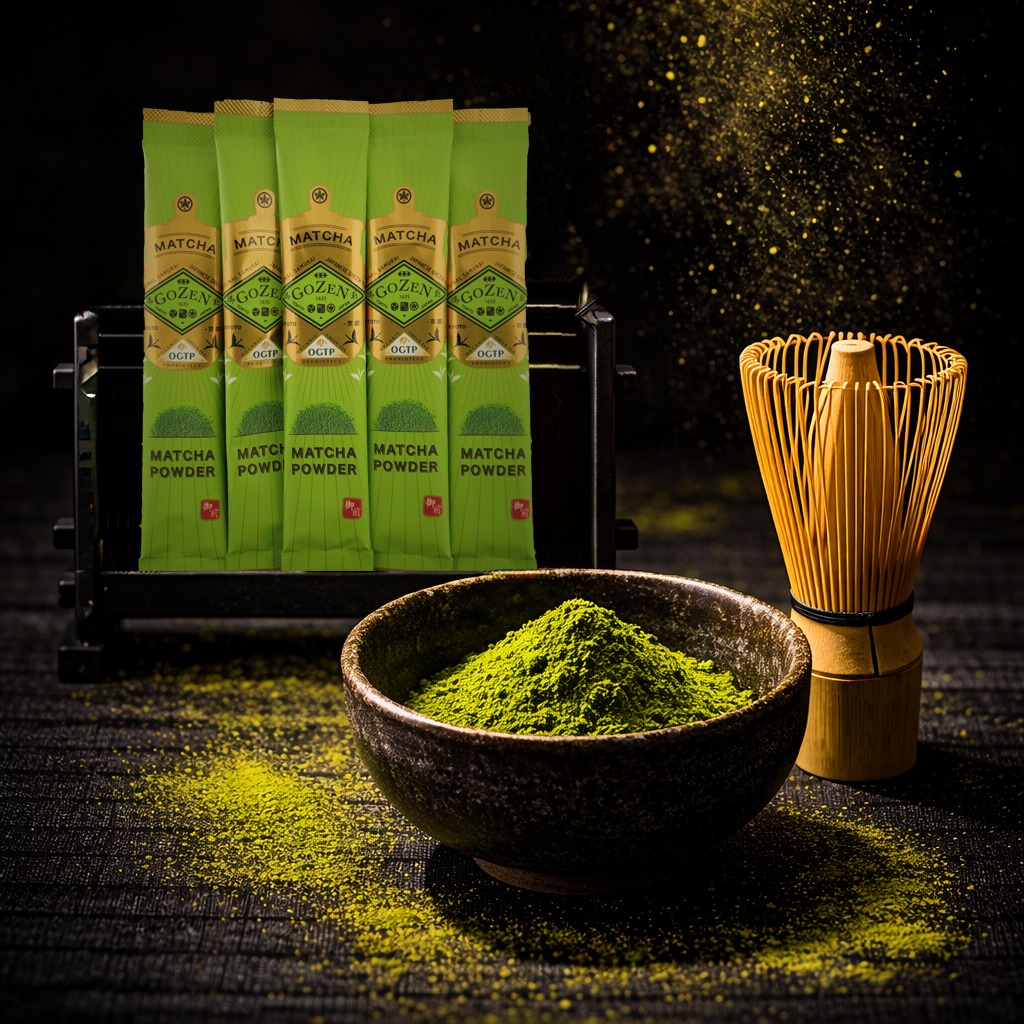
The Samurai Legacy of Gozen Matcha
In the Kirishima mountains, a historic samurai family has cultivated matcha using traditional methods that respect both the land and its microbial ecosystem.
Their tea gardens produce what is now known as Gozen Biome Matcha—a ceremonial-grade matcha grown under deep shade before harvest, allowing the leaves to concentrate valuable compounds such as L-theanine, catechins, and chlorophyll.
The shading process, which lasts several weeks before harvesting, forces the plant to adapt to reduced sunlight. In response, the tea leaves increase production of protective molecules that contribute to matcha’s distinctive flavor and nutritional richness.
Combined with Kirishima’s volcanic soil, this method produces a tea uniquely rich in plant metabolites that interact with the human body in subtle ways.
Matcha and the Microbiome
Unlike regular green tea, matcha is made from finely ground whole tea leaves. This means that when you drink matcha, you consume the entire leaf—along with its full spectrum of nutrients.
Researchers studying nutrition and longevity are increasingly interested in how matcha’s polyphenols interact with the gut microbiome.




No comments yet.